Monday, July 10, 2017

What a Bestselling Author Knows About the True Genius of Steve Jobs and Ben Franklin

Inc., July 10, 2017


by Theodore Kinni


In May, Walter Isaacson, CEO of the Aspen Institute and former chairman and CEO of CNN, came to my hometown to deliver the commencement address and pick up an honorary degree at The College of William & Mary. You probably know him for his best-selling biographies, including Steve Jobs (Simon & Schuster, 2011) and Benjamin Franklin: An American Life (Simon & Schuster, 2003).

Given Isaacson's obvious interest in the personality traits, innovative thinking, and entrepreneurial flair of geniuses, I expected his address to celebrate mavericks or, as Apple put it in the memorable "Think Different" ad campaign, "the crazy ones." But he threw a changeup.

"We taught you here to be individual achievers. We celebrated individual achievement and even singular visionaries," Isaacson told William & Mary's graduating class of 2017. "What we forgot to tell you is that in the real world it's not about singular achievement. It's about teamwork. It's about being able to collaborate. When you get to the real world, you are going to learn that innovation is a team sport and that success is a collaborative effort." Read the rest here.

Wednesday, July 5, 2017

'Hit 'em Where They Ain't!' and Two More Lessons in Strategy From General Douglas MacArthur

Inc., July 5, 2017

by Theodore Kinni


Seventy-two years ago today, on July 5, 1945, General Douglas MacArthur officially announced the liberation of the Philippines. It was a triumphal moment for the 5-star general. It marked the ultimate fulfillment of his memorable promise ("I shall return"), and it brought the war in the Pacific to Japan's doorstep.

MacArthur was one of the world's most admired leaders in those days, and although the Chinese and President Harry Truman would tarnish his shining reputation in the 1950s, MacArthur's strategic creativity, agility, and focus in World War II's Pacific Theater remain a high point in military history. They also offer valuable lessons to founders who are searching for innovative ways to gain a foothold in highly competitive markets populated by stronger, more established players.

Here are three of those lessons, drawn from No Substitute for Victory: Lessons in Strategy and Leadership from General Douglas MacArthur. Read the rest here.

Monday, July 3, 2017

Spend Your Weekend Like Shonda Rhimes (Studies Prove It Will Boost Your Productivity)

Inc., July 1, 2017

by Theodore Kinni


"You can work long, hard or smart, but at Amazon.com, you can't choose two out of three," asserted Jeff Bezos in his 1997 letter to shareholders. Journalist Katrina Onstad strenuously disagrees: "Actually, you should choose: the last two. The first one is bullshit."

Onstad makes that case in her new book, The Weekend Effect: The Life-Changing Benefits of Taking Time off and Challenging the Cult of Overwork (HarperOne, May 2017). In it, she cites studies stretching back to the early 1900s that prove that our productivity and effectiveness decline when we consistently exceed 40-hour work weeks. This should give pause to entrepreneurs who think they--and their employees--have to work long hours to succeed.

In fact, Onstad calls out some highly successful founders whose work ethic might give Jeff Bezos pause--like TV producer and showrunner Shonda Rhimes. Rhimes gets as many as 2,500 emails daily, but she won't read or respond to them after 7:00 pm on weeknights or on weekends. "Work will happen twenty-four hours a day, 365 days a year if you let it," Rhimes told NPR. "It suddenly occurred to me that unless I just say, 'That's not going to happen,' it was always going to happen."

I interviewed Onstad (on a Wednesday during working hours) to learn more about The Weekend Effect and why and how we should reclaim our weekends. Read the rest here.

Saturday, July 1, 2017

Ethics Should Precede Action in Machine Intelligence

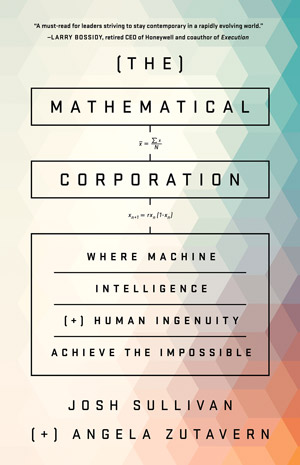
Mathematical Corp Book Cover JacketMIT Sloan Management Review, June 29, 2017

by Theodore Kinni


As analytics and Big Data continue to be integrated into organizational ways and means from the C-suite to the front lines, Josh Sullivan and Angela Zutavern believe that a new kind of company will emerge. They call it the “mathematical corporation” — a mash-up of technology and human ingenuity in which machines delve into every aspect of a business in previously impossible ways and produce insights that will allow previously unimaginable solutions — new businesses, strategies, products and services, and so on.

Sullivan and Zutavern don’t think the mature mathematical corporation exists yet, but they do have a privileged view of the forces that will produce it. Both are executives at Booz Allen Hamilton Inc., where Sullivan organized and leads the company’s data science and advanced analytics capabilities, and Zutavern is developing applications of machine intelligence to organizational leadership and strategy.

In their new book, The Mathematical Corporation, Sullivan and Zutavern explore how company leaders can prepare for and accelerate the transformation to a new corporate model. The following excerpt from Chapter 7, edited for space, examines the inevitable ethical conflicts that will arise — and have already arisen — as the ability of companies to collect and parse personal data explodes. And more important, it points out the need to proactively anticipate those conflicts. Read the excerpt here.

Monday, June 26, 2017

This Treasure Map Launched Disney's $17 Billion Theme Park Business

Inc., June 26, 2017

by Theodore Kinni


On Sunday, June 25, a map of Disneyland sold for $708,000, the highest price ever paid at auction for a piece of Disney memorabilia. It's worth every penny. This is the map that Walt Disney and his brother Roy used to raise the financing needed to build Disneyland. This map launched the parks and resorts business that swelled the coffers of the Walt Disney Company by $17 billion in fiscal 2016.

I first heard about the map while conducting research for a book about the Disney Company's approach to customer service. It's a great tale of entrepreneurship and innovation and the power of focus in achieving audacious goals.

The map was drawn in September 1953, over a single weekend. As Disney Legend Herb Ryman later recalled, Walt called him on a Saturday morning and asked him to come to the studio. When Herb arrived, Walt explained that he needed $17 million to build Disneyland.

"Gee, that's a lot of money," said Herb. "What's the park going to be like?"

"It's going to have a lot of rides and it's going to have a train," said Walt. "It's going to have a lot of things, a whole lot of things. A lot of people. Very exciting. Roy has got to take a drawing with him on Monday morning to show the bankers. You know the bankers don't have any imagination."

"Well, where are the drawings?" asked Herb. "I'd like to see them."

"Oh, you're going to make them," said Walt. Read the rest here

Thursday, June 22, 2017

The Critical Difference Between Complex and Complicated

MIT Sloan Management Review, June 21, 2017

by Theodore Kinni


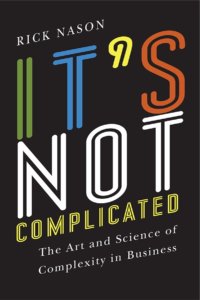
It’s time to call out the real culprit in far too many business failures — Dr. Peter Mark Roget and his insidious thesaurus. Roget is long dead, but his gang of modern-day editors still assert that the words “complex” and “complicated” are synonyms. Unfortunately, as Rick Nason, an associate professor of finance at Dalhousie University’s Rowe School of Business, ably explains in his new book, It’s Not Complicated, if you manage complex things as if they are merely complicated, you’re likely to be setting your company up for failure.

Complicated problems can be hard to solve, but they are addressable with rules and recipes, like the algorithms that place ads on your Twitter feed. They also can be resolved with systems and processes, like the hierarchical structure that most companies use to command and control employees.

The solutions to complicated problems don’t work as well with complex problems, however. Complex problems involve too many unknowns and too many interrelated factors to reduce to rules and processes. A technological disruption like blockchain is a complex problem. A competitor with an innovative business model — an Uber or an Airbnb — is a complex problem. There’s no algorithm that will tell you how to respond.

This could be dismissed as an exercise in semantics, except for one thing: When facing a problem, says Nason, managers tend to automatically default to complicated thinking. Instead, they should be “consciously managing complexity.” In the excerpt that follows, which is edited for space, Nason explains how. Read the rest here.

Tuesday, June 20, 2017

There's One Question You Must Ask Before Solving Any Problem (It's Also the Most Underrated Management Skill)

Inc., May 20, 2017

by Theodore Kinni


It's often said that most business books would make better articles, but there's an article in Sloan Management Review that turns the truism on its head. The article, titled 'The Most Underrated Skill in Management,' would make a great book. What is this skill? It's the ability to formulate a problem statement.

"There are few questions in business more powerful than 'What problem are you trying to solve?'" write authors Nelson P. Repenning, Don Kieffer, and Todd Astor. "In our experience, leaders who can formulate clear problem statements get more done with less effort and move more rapidly than their less-focused counterparts. Clear problem statements can unlock the energy and innovation that lies within those who do the core work of your organization."

To learn more about this most underrated skill, I interviewed Nelson Repenning, MIT Sloan School of Management Distinguished Professor of Systems Dynamics and Organizational Studies and chief social scientist at ShiftGear Work Design. Read the rest here.

Wednesday, June 14, 2017

Love Her or Hate Her, Ayn Rand Can Make You a Better Leader

Inc., June 14, 2017

by Theodore Kinni


Ayn Rand is one of the most polarizing figures in American culture--and she's been dead for 35 years. People either love or hate the author of Atlas Shrugged and The Fountainhead. And when I co-authored Ayn Rand and Business about how Rand's philosophy of Objectivism applies to management, I got caught in the crossfire.

The Rand haters rejected the book because they think Rand is a heartless monster. And when Rand lovers discovered that I didn't think she had lived up to her own philosophical tenets, they rejected the book as a back-handed attack on Objectivism. Both camps ignored the actual thesis of the book--that Rand's Objectivism is a terrific philosophy for management. It can make you a better leader, enhance your ability to innovate, and intensive your focus on building a successful business.

Evidence for this can be found in Rand's seven Objectivist virtues. These virtues are behaviors that Rand said we all need to cultivate to succeed in life. When you apply them to business, they provide a guide for getting the most value out of your work. Read the rest here.

Monday, June 12, 2017

One Doctor’s Take on How to Fix the Sick Healthcare System

strategy+business, June 12, 2017

by Theodore Kinni

A decade after presidential candidate Barack Obama first declared comprehensive healthcare reform a central tenet of his platform — and seven decades after President Harry S. Truman proposed a national healthcare plan — the issue still stands at the center of political debate. In 2017, a Republican-dominated Congress and a new Republican president are grappling with their own comprehensive plan.

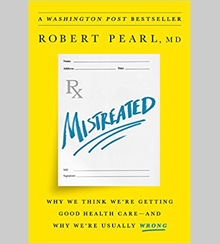
But even if the Affordable Care Act is repealed and replaced, Dr. Robert Pearl believes U.S. consumers and companies are unlikely to get any relief from rising costs. That’s what Pearl argues in his no-holds-barred book, Mistreated. This line of argument is dismaying and more than a little surprising, especially considering that Pearl isn’t an academic, or an activist, or a pundit with a shallow outsider’s knowledge of the industry. For nearly 20 years, until this month, he was the CEO of the Permanente Medical Group, which is a subsidiary of California-based managed-care giant Kaiser Permanente as well as the largest provider network in the nation in its own right, with more than 9,000 physicians and 34,000 staff members. In other words, he’s one of the people who manage a significant chunk of our increasingly unaffordable medical care.
“As we look toward the future, the economics of healthcare are shaping up to be a classic example of the unstoppable force meeting the immovable object,” Pearl writes. “The rising percentage of total dollars spent on healthcare (unstoppable force) and the limited ability of government, businesses, and individuals to pay for it (immovable object) are on a collision course. Something has to give.”
In Mistreated, Pearl argues that it doesn’t really matter who pays for healthcare, which has been the primary focus of the decade-long reform debate. Read the rest here

Thursday, June 8, 2017

The Greatest Business Failure Of All Time Produced One of The Best-Selling Books Ever

Inc., May 8, 2017

by Theodore Kinni


On June 8, the original manuscript of one of the best-selling books of all time was supposed to have been sold at auction. Valued at $2-3 million, it's title is Alcoholics Anonymous, but it's better known as the Big Book and, for nearly 80 years, it's been helping alcoholics in their struggle to get and stay sober.

In late May, Alcoholics Anonymous sued to stop the sale, claiming it was the rightful owner of the manuscript. But that's hardly the most interesting part of this story. What you probably don't know about the Big Book is that it played an integral role in the greatest business failure of all time.

In 1937, Alcoholics Anonymous co-founders Bill Wilson and Dr. Bob Smith discussed publishing a book to raise awareness about alcoholism, to help promote their program for combating the disease, and to attract investors for a for-profit chain of detox centers.

Recovering alcoholics themselves, Bill W. and Dr. Bob, as they are known, almost got the business off the ground. Read the rest here

Tuesday, June 6, 2017

These Princeton Professors Found 4 Personality Types for Entrepreneurs. Which One Are You?

Inc., June 6, 2017

by Theodore Kinni


There are a lot of factors that contribute to the success--or failure--of a new business. But Chris Kuenne and John Danner, both of whom teach entrepreneurship at Princeton University's Keller Center, are convinced that one of them trumps all the rest.

"The personality of the leader or founder is the driving force in building any new business," they write in their new book, Built for Growth: How Builder Personality Shapes Your Business, Your Team, and Your Ability to Win (Harvard Business Review Press, June 2017).

That's good news, say the authors, "[because] unlike the other resources you need to successfully grow a business, personality is the one directly--and quintessentially--in your control." Of course, that begs a big question: Will any old personality do? After all, we've all got one.

Kuenne and Danner decided to find out. They adapted a personality-based clustering methodology used by marketers to parse the personalities of 450 entrepreneurs whose companies had achieved at least $3 million in annual revenue and had been in business for at least three years.

They studied the motivation and self-identity of these business builders, their decision-making and leadership styles, and their management approach. They found four distinct personalities of new business builders, which they label the Driver, Explorer, Crusader, and Captain. Read the rest here

Thursday, June 1, 2017

Keith Richards Is a Surprisingly Good Leader. Here's His Number One Secret

Inc., June 1, 2017

by Theodore Kinni

Most leadership lessons come from management books, but sometimes they pop up in unexpected places, like Rolling Stones lead guitarist Keith Richards' memoir, Life (Little Brown, 2010). As you would expect, Life is filled with rollicking stories, like the one in which a very ticked-off Charlie Watts punched out a very wasted Mick Jagger for imperiously demanding to see "his drummer" at five in the morning. But it also offers a few business insights.

One of them is the importance of focus and prioritization to a successful career. You might think that being the lead guitarist of the world's greatest bar band is all about sex, drugs, and rock n' roll. But the 550-page book makes it clear that rock n' roll always comes first for Richards. The fact that Richards takes his music seriously shouldn't be surprising. After all, you don't get paid a king's ransom for more than a half-century for doing your job unless you're damn good at it.

My favorite business lesson in Life comes in a throw-away paragraph early on. Read the rest here.

Sunday, May 28, 2017

The 50-Year-Old Business Book You Need to Read (or Reread) Right Now

Inc., May 26, 2017

by Theodore Kinni


There aren't a lot of business books from a half-century ago that have stood the test of time, but Peter Drucker's The Effective Executive (Harper Business), now available in a spiffy new 50th Anniversary edition, is one of the select few. In 1967, back before Millennials were a gleam in their parents' eyes, Drucker declared, "The executive is, first of all, expected to get the right things done. And this is simply saying that he is expected to be effective."

Drucker is as relevant today as he was in the latter half of the last century because he approached the study of business like a surgeon. His clarity of thought and language was like a scalpel, which he used to dissect every aspect of management until he had revealed its essence. In The Effective Executive, Drucker applied that scalpel to leadership.

Drucker was convinced that leaders are made, not born. He described five practices that can make you a more effective leader: read the rest here

Wednesday, May 24, 2017

Cracking the Code of Economic Development

strategy+business, May 24, 2017

by Theodore Kinni


Jobs are the burning issue of the day. But while politicians are busy erecting physical, economic, and rhetorical walls to corral and preserve jobs, a larger and more fundamental question looms. As advances in artificial intelligence and machine learning permeate every industry, will there be any jobs left to protect?

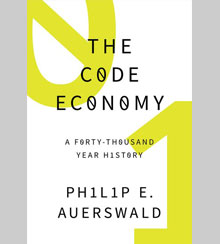
Philip E. Auerswald, associate professor at George Mason University’s Schar School of Policy and Government, calls this question “The Great Man–Machine Debate.” In his engaging and wide-ranging book, The Code Economy: A Forty-Thousand-Year History, he seeks to answer it by reframing how we think about economic dynamics and progress. “The microeconomics you learned in college was generally limited to the ‘what’ of production: what goes in and what comes out,” Auerswald writes. “This book is about the ‘how’: how inputs are combined to yield outputs.”

Auerswald has a more expansive definition of the word code than the typical computer scientist. For him, code encapsulates the how of production — that is, the technology and the instruction sets that guide production. The processes Paleolithic peoples used to create stone tools, the punch cards that Joseph Marie Jacquard used to direct looms in France in the early 1800s, Henry Ford’s assembly lines, and the blockchains first described by the person (or persons) named Satoshi Nakamoto in 2008: All these are, in Auerswald’s view, examples of code. Read the rest here.

Sunday, May 21, 2017

The 3 Most Dangerous Work Personalities and How to Deal With Them

Inc., May 20, 2017

by Theodore Kinni


Since I don't have real job, I take special pleasure in reading about how bad having a real job can be. So, of course, I found it impossible to resist Jody Foster's The Schmuck in My Office: How to Deal Effectively with Difficult People at Work (with Michelle Joy, St. Martin's Press, April 2017). No, not that Jody Foster--Dr. Jody J. Foster, clinical professor of psychiatry at the Perelman School of Medicine at UPenn.

None of us are perfect, but Foster directs our attention to those select employees who really are schmucks--10 types of people whose personalities are so difficult and disruptive that they create chaos on the job, upset their coworkers, and drive their managers to distraction. Unfortunately, you'll recognize many of them. There's the Bean Counter, whose obsessive demands for the most minute details ensure that nothing meaningful ever gets done, and the Robotic, whose inability to connect with others on anything near a human level leaves people frostbitten and demotivated.

But even these knuckleheads are tolerable compared with the worst schmucks that Foster calls out in her book: Narcissus, The Venus Flytrap, and The Swindler. Here's how to recognize these three types and minimize the damage they can do to you and your company. Read the rest here.

Wednesday, May 17, 2017

An Antidote for Health Care Reform Failure

Insights by Stanford Business, May 16, 2017

by Theodore Kinni


Vaccines on a tray at the hospital
Want real health care reform? Focus on fixing health care delivery, says one Stanford lecturer. | Reuters/Nicky Loh
Health care reform has been the bane of U.S. presidential politics for over a century. Teddy Roosevelt included universal coverage in his run for president in 1912 and lost. Since then, almost every U.S. president has been stymied by health care reform in one way or another.
It’s no different this time around. This past March, President Trump and the Republican-led Congress couldn’t muster the votes for their own American Health Care Act, and discussions to reprise it have fallen flat.
Robert Pearl, a doctor and the CEO of the $11 billion Permanente Medical Group and a strategy lecturer at Stanford Graduate School of Business, says that might not be much of a loss. In Pearl’s opinion, neither President Obama’s Affordable Care Act nor President Trump’s AHCA adequately addresses the essential conundrum of American health care — the fact that the U.S. as a whole spends 50% more on health care that any other nation, yet ranks 70th globally in health and wellness.
Pearl, whose new book, Mistreated: Why We Think We’re Getting Good Health Care — and Why We’re Usually Wrong, hits shelves this month, shares his vision of a better health system...read the rest here

Tuesday, May 16, 2017

How to Order Wine Without Making a Fool of Yourself

Inc., May 16, 2017

by Theodore Kinni


CREDIT: Getty Images
Americans drink more wine than people of any other nationality--we chugged 913 million gallons of the nectar of the gods in 2015.

Yet, sit most of us down at a fancy restaurant with a multipage wine list and a sommelier breathing down our necks, and we start to think a beer sounds really good. Make it an important business dinner with a prospective employer or a big customer and a shot of bourbon with that beer sounds even better.

It doesn't have to be this stressful. In fact, wine can help you seal the deal, according to Bianca Bosker, author of Cork Dork: A Wine-Fueled Adventure Among the Obsessive Sommeliers, Big Bottle Hunters, and Rogue Scientists Who Taught Me to Live for Taste (Penguin, March 2017).

Bosker is a journalist by training who "generally preferred wines from a bottle, but certainly wouldn't have turned up [her] nose at something boxed" before she became fascinated by the highly competitive, sensory world of sommeliers. She dove into that world for a year and emerged as a Court of Master Sommeliers' Certified Sommelier (she's one of the mere five percent of applicants who passed that exam on their first attempt).

In the following interview, Bosker offers us some savvy advice on how to order wine in a business setting...read it here

Thursday, May 11, 2017

Train Your Brain To Focus. It'll Make You a Better Leader

Inc., May 11, 2017


You've probably seen the famous experiment that Harvard University psychologists Christopher Chabris and Daniel Simons conducted in 1999. They filmed two teams of students--one in white t-shirts; one in black t-shirts--weaving around and through each other. Each team was passing a basketball back and forth. Then the psychologists showed the film to a group of subjects, who were asked to count the number of passes by the white-shirted team. Simple, right?

Not so much. When they made the film, Chabris and Simons had a student in a gorilla suit walk into the middle of the two teams, stop and beat her chest, and walk out the other side of the picture. After they showed the film to their subjects, the duo asked the subjects if they had noticed anything unusual. Almost half of the subjects never saw the gorilla.


The "Invisible Gorilla" experiment is often cited as one more lesson in the many facets of cognitive failure. But Friederike Fabritius and Hans W. Hagemann of Munich Leadership Group argue that a sharp, strong focus is an essential trait and strength of leaders.

"The truth is that what is often perceived as distracted behavior by outsiders is actually an indication of the exact opposite! It's a sign of intensely focused behavior," they write in their new book, The Leading Brain: Powerful Science-Based Strategies for Achieving Peak Performance (TarcherPerigee, Feburary 2017). "Your brain has allocated nearly all of its resources toward solving one specific problem and has deliberately and efficiently shut out any stimuli that are considered irrelevant to the task at hand."

The problem with which leaders must contend isn't too much focus, but too little. We live in an era of distraction, when the ability to multitask is often celebrated as a virtue. Instead, say the authors, "multitasking is the arch enemy of focus." To beat this enemy and sharpen your leadership focus, Fabritius and Hagemann recommend these seven tactics...read the rest here

Saturday, May 6, 2017

Here's How Steve Jobs Drove Apple's Phenomenal Growth

Inc., May 6, 2017

By Theodore Kinni


"Innovate or die," declared management philosopher Peter Drucker. But innovation is easier said than done. Established players like Procter & Gamble have departments full of people devoted to continuously launching "new-and-improved" products, while investor-funded newcomers like Airbnb can afford to burn through billions of dollars annually in the quest to disrupt their markets. How are you supposed to beat fierce, deep-pocketed competitors like them at the innovation game?

David Robertson, a Wharton professor who studies and teaches innovation and product development, thinks there is another way to innovate that is different from the incremental innovation of a P&G and the big-bang disruption of an Airbnb. In his new book, The Power of Little Ideas: A Low-Risk, High-Reward Approach to Innovation (with Kent Lineback, Harvard Business Review Press, May 2017), he describes this 'Third Way' as complementary innovation and explains how you can use it to gain a competitive advantage for your company...read the rest here

Monday, May 1, 2017

To Fire or Not to Fire: 3 Questions to Ask Yourself Before You Let Someone Go

Inc., May 1, 2017

by Theodore Kinni

Reruns of The Celebrity Apprentice notwithstanding, firing people is not much fun. It's costly, too: studies show that firing and replacing an employee costs anywhere from thousands of dollars to two times the employee's annual salary. That's why you want to be sure you are making smart firing decisions.

But aside from the obvious cases (I'm thinking of you, Bill O'Reilly), how do you know if and when you should fire an employee? Kim Scott offers some savvy advice on that very topic in her new book, Radical Candor: Be A Kickass Boss Without Losing Your Humanity (St. Martin's Press, March 2017). Scott, an entrepreneur who did stints at Google and Apple before founding training consultancy Candor, Inc., says that before you fire someone, you should ask yourself three questions...read the rest here