 MIT Sloan Management Review, October 24, 2016
by Theodore Kinni
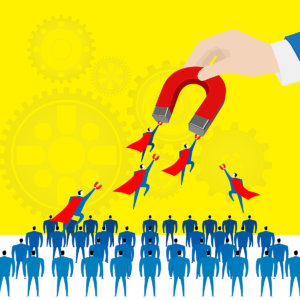
Platforms are all the rage these days. Companies are being urged to create their own — à la Uber and Airbnb. But platform advocates often take one thing for granted: a seemingly infinite supply of workers who will happily do the platform operator’s bidding in return for, well, whatever the operator is willing to give them.
That may not be a sound assumption, especially as the competition heats up in platform markets that prove viable. Witness Sheelah Kolhatkar’s article on Uber’s fast-growing rival, Juno, in The New Yorker. “Juno’s business model is to take what Uber has created and appropriate it,” writes Kolhatkar. “Most of what Juno does is predicated on the fact that many drivers feel mistreated by Uber. … If Uber seems cold and impersonal, Juno will smother its drivers with attention. If Uber has raised its commission — the part of each fare that the company keeps — Juno will set a much lower one.”
As the folks at Uber think about how to frame a response to the wooing away of its drivers, they might want to read the new report on platform workers from the Institute for the Future. The IFTF did an ethnographic study of a select group of platform workers. It found the workers fit into seven distinct archetypes and that there are seven qualities that define the platform working experience.
The study also found out what platform workers care about. Their top three concerns: income potential; control over choosing which jobs to take; and work frequency, immediacy of payment, and convenience.
Uber isn’t the only company that should be reading the IFTF report. Its battle for drivers suggests that eventually all successful platform companies will have to compete for contract workers. So they better get to know them. Read the rest here.
Monday, October 24, 2016
TechSavvy: Competing for Talent in the Platform Economy

Thursday, October 20, 2016
TechSavvy: Beware the Paradox of Automation
 MIT Sloan Management Review, October 20, 2016
by Theodore Kinni
Earlier this year, Facebook exorcised those pesky human editors who were introducing political bias into its Trending news list and left the job to algorithms. Now, reports Caitlin Dewey in The Washington Post, the Trending news isn’t biased, but some of it is fake. Turns out the algorithms can’t tell a real news story from a hoax.
Facebook says it can improve its algorithms, but errors of judgment aren’t the only pitfall in transferring human tasks to machines. There’s also the paradox of automation. “It applies in a wide variety of contexts, from the operators of nuclear power stations to the crews of cruise ships, from the simple fact that we can no longer remember phone numbers because we have them all stored in our mobile phones, to the way we now struggle with mental arithmetic because we are surrounded by electronic calculators,” says Tim Hartford in an excerpt published by The Guardian from his new book, Messy: The Power of Disorder to Transform Our Lives. “The better the automatic systems, the more out-of-practice human operators will be, and the more extreme the situations they will have to face.”
Hartford borrows William Langewiesche’s harrowing description of the crash of Air France Flight 447 to illustrate three problems with automation: “First, automatic systems accommodate incompetence by being easy to operate and by automatically correcting mistakes. … Second, even if operators are expert, automatic systems erode their skills by removing the need for practice. Third, automatic systems tend to fail either in unusual situations or in ways that produce unusual situations, requiring a particularly skillful response.”
The excerpt is worth a read — especially if it prompts you to ask if your company’s automation initiatives might entail similar risks. Read the rest here.
Wednesday, October 19, 2016
Can Conversation Supplant Bureaucracy?
strategy+business, October 19, 2016
by Theodore Kinni
 In 2012, Catherine Turco became increasingly intrigued by what she saw as a corporate preoccupation with openness. The open communication, decision processes, innovation, and offices in Web 2.0 companies like Facebook and Google were on their way to becoming corporate memes. And stalwarts like IBM and GE were making well-publicized forays into wikis and crowd-sourced product development. In particular, the associate professor of organizational studies at the MIT Sloan School of Management was struck by the gospel of “radical openness” being fervently preached by the leaders of a fast-growing, 600-employee social media firm, which she identifies only as TechCo.
“‘Could this work?’ I wondered,” recalls Turco. “Maybe it was all talk — a savvy presentation of corporate self that masked the same bureaucratic and hierarchical practices firms have had for years. Then again, maybe it would carry lessons for how corporations really could change. One December morning I woke up and decided I had to study TechCo.”
Turco devoted 10 months to that study, spending four days per week at the company; conducting nearly 100 interviews with 77 employees, including the senior leadership team; shadowing and socializing with employees; and attending innumerable meetings during and after work hours, as well as the week-long new employee training program. The welcome result of her immersion into all things TechCo is The Conversational Firm: Rethinking Bureaucracy in the Age of Social Media (Columbia University Press, 2016). This well-written, insightful ethnographic study solidly establishes the notion that hierarchical command-and-control structures and distributed decision-making structures (like holacracy) are not the only choices for managing a company. Read the rest here.
Thursday, October 13, 2016
TechSavvy: Why Digitization Won’t Put Operations Managers Out of Work
MIT Sloan Management Review, October 13, 2016
by Theodore Kinni
 On Oct. 3, ING Group joined a growing number of big European banks when it announced a big investment in digital technology (800 million euros) and a big reduction in force (11% or 5,800 jobs). “Unfortunately digital transformation means less jobs,” CFO Patrick Flynn told Bloomberg Television not very ruefully.
But perhaps not fewer management jobs. “Even as organizations balance lower investment in traditional operations against greater investment in digital, the need for operations management will hardly disappear,” write McKinsey consultants Albert Bollard, Alex Singla, Rohit Sood, and Jasper van Ouwerkerk in a new article in McKinsey Quarterly. “In fact, we believe the need will be more profound than ever.”
In the near term, the challenge will be the ability of companies “to embrace digital innovation and operations-management discipline at the same time.” That, the authors say, will require figuring out how to combine digital and human resources, modify employee roles to showcase and sustain digitization, support customers as they figure out how to work with the organization, and develop leaders and managers with “much stronger day-to-day skills in working with their teams.” Read the rest here.
Wednesday, October 12, 2016
Nilofer Merchant’s Required Reading
strategy+business, October 12, 2016
by Theodore Kinni
Nilofer Merchant knows something about value creation. By her reckoning, she has had a hand in launching more than 100 products that have netted a combined US$18 billion in sales — first in stints at Apple and Autodesk, and later as an advisor to technology companies such as Logitech, Symantec, and HP.
Rather than focusing on processes and tools, Merchant sees the humanist values of diversity, inclusivity, and collaboration as the keys to creating corporate value. “It’s not that everyone will but that anyone can contribute,” she says.
Her two books reiterate the message. In The New How: Creating Business Solutions through Collaborative Strategy (O’Reilly Media, 2010), Merchant traces the difficulties that many companies encounter in executing strategy to the conventional top-down approach to strategy formulation. She argues for a more inclusive approach to strategy-making that enlists the people responsible for executing it. In 11 Rules for Creating Value in the #SocialEra (Harvard Business Press, 2012), Merchant contends that social technologies and tools have given rise to a new era in which the basis for value creation is collaboration and co-creation by communities of people who are united by an aspirational purpose.
I asked Merchant for a short list of the best reads on value creation. She called out the following three books and a seminal article on organizational learning. Read the rest here.
Thursday, October 6, 2016
Tech Savvy: Hacking Your Work-Life Balance
MIT Sloan Management Review, October 6, 2016
by Theodore Kinni

Smith has his hands full. The Provo, Utah-based online survey company he helped co-found in 2002 has 1,200 employees and a valuation of more than $1 billion. He and wife Ashley, who has a business of her own, have five kids ranging from 4 months to 8 years old. But he says he keeps it all together by “hacking the integration” of life and work. That means tracking both work and family time.
“Smith continually uses data to inform and guide the way he allocates his time,” explains Lev-Ram. “With the aid of an executive assistant who’s a former statistician, Smith tracks everything from the number of hours he devotes to interviews to how much one-on-one time he spends with each of his children. Ask him how many nights he spent away from home last year, and all he has to do is consult a spreadsheet.” Quarterly, the CEO reviews a colored-coded spreadsheet that summarizes how he spent his time, and then sets new goals and rules for work and life.
Who knows? If Smith keeps it up for another 20 years or so, maybe his CEO memoir won’t be quite as dismal as all the others. Read the rest here.
Thursday, September 22, 2016
TechSavvy: That Sound You Hear Is Your Enterprise’s AI Technology
MIT Sloan Management Review, Sept. 22, 2016
by Theodore Kinni
 Apple held its “Special Event” and, among other things, officially killed the iPhone’s 3.5-millimeter earbud jack, replacing it with $159 wireless AirPods. My first reaction: Meh. But then I read Mike Elgan’s paean to this development in Computerworld.
Elgan says that AirPods are actually artificial intelligence hardware. “The biggest thing going on here is the end of ‘dumb speaker’ earbuds, and the mainstreaming of hearables — actual computers that go in your ears,” he says. “Bigger still is that the interface for these tiny computers is a virtual assistant. When you double-tap on an AirPod, Siri wakes up, enabling you to control music play and get battery information with voice commands.”
What does this mean for your company? Soon every employee could have a supercomputer whispering in his or her ear. For instance, Hearables startup Bragi and IBM just announced that they plan to combine Bragi’s Dash earbuds and IBM’s Watson IoT platform “to transform the way people interact, communicate, and collaborate in the workplace.”
Earbud-sporting workers, according to the companies, will use the devices to “receive instructions, interact with co-workers, and enable management teams to keep track of the location, operating environment, well-being, and safety of workers.” Bragi and IBM have targeted six areas of initial focus: worker safety, guided instructions, smart employee notifications, team communications, workforce analysis and optimization, and biometric ID. Read the rest here.
Thursday, September 15, 2016
TechSavvy: Monitoring Your Employees’ Every Emotion
MIT Sloan Management Review, September 15, 2016
by Theodore Kinni
 Have you heard about the Cowlar? It’s a smart collar that dairy farmers can strap around the necks of cows to monitor their herds. It promises improved milk production, early disease detection, heat detection, and real-time monitoring and alerts. How would you feel about wearing one? I ask because it seems like it’s a question that more and more employers are asking their employees.
“Companies including JPMorgan Chase and Bank of America have had discussions with tech companies about systems that monitor worker emotions to boost performance and compliance, according to executives at the banks,” reports Hugh Son in Bloomberg Businessweek. They got the idea from MIT Sloan School prof Andrew Lo, who strapped wristwatch sensors that measure pulse and perspiration on 57 stock and bond traders to monitor their reactions in a simulated trading environment. “Imagine if all your traders were required to wear wristwatches that monitor their physiology, and you had a dashboard that tells you in real time who is freaking out,” Lo said to Son. “The technology exists, as does the motivation—one bad trade can cost $100 million.”
If this suggests that employee monitoring devices will be limited to high-risk occupations, you should read Thomas Heath’s Washington Post article on Boston-based Humanyze. Humanyze makes and monitors employee ID badges that hang around your neck. “Each has two microphones doing real-time voice analysis, and each comes with sensors that follow where you are in the office, with motion detectors to record how much you move,” writes Heath. “The beacons tracking your movements are omitted from bathroom locations, to give you some privacy.” The company’s CEO Ben Waber predicts that “every single” ID badge will be so equipped within three to four years.
As with other means of digitally monitoring and measuring employee activity, companies probably should expect some pushback, including legal challenges relating to privacy and discrimination. But Waber says that you can tell employees that their new IDs are “exactly like a Fitbit for your career.” I think it’s going to be a little harder to explain away their unflattering similarity to Cowlars. Read the rest here.
Wednesday, September 14, 2016
Amy Edmondson’s Required Reading
strategy+business, September 14, 2016
by Theodore Kinni
Thursday, September 8, 2016
TechSavvy: A Code of Ethics for Smart Machines
MIT Sloan Management Review, September 8, 2016
by Theodore Kinni
Smart machines need ethics, too: Remember that movie in which a computer asked an impossibly young Matthew Broderick, “Shall we play a game?” Four decades later, it turns out that global thermonuclear war may be the least likely of a slew of ethical dilemmas associated with smart machines — dilemmas with which we are only just beginning to grapple.
The worrisome lack of a code of ethics for smart machines has not been lost on Alphabet, Amazon, Facebook, IBM, and Microsoft, according to a report by John Markoff in The New York Times. The five tech giants (if you buy Mark Zuckerberg’s contention that he isn’t running a media company) have formed an industry partnership to develop and adopt ethical standards for artificial intelligence — an effort that Markoff infers is motivated as much to head off government regulation as to safeguard the world from black-hearted machines.
On the other hand, the first of a century’s worth of quinquennial reports from Stanford’s One Hundred Year Study on Artificial Intelligence (AI100) throws the ethical ball into the government’s court. “American law represents a mixture of common law, federal, state, and local statutes and ordinances, and — perhaps of greatest relevance to AI — regulations,” its authors declare. “Depending on its instantiation, AI could implicate each of these sources of law.” But they don’t offer much concrete guidance to lawmakers or regulators — they say it’s too early in the game to do much more than noodle about where ethical (and legal) issues might emerge.
In the meantime, if you’d like to get a taste for the kinds of ethical decisions that smart machines — like self-driving cars — are already facing, visit MIT’s Moral Machine project. Run through the scenarios and decide for yourself who or what the self-driving car should kill. Aside from the fun of deciding whether to run over two dogs and a pregnant lady or drive two old guys into the concrete barrier, it’ll help the research team create a crowd-sourced view of how humans might expect of ethical machines to act. This essay from UVA’s Bobby Parmar and Ed Freeman will also help fuel your thinking. Read the rest here.

Thursday, September 1, 2016
TechSavvy: Every Company Is a Tech Company and Tech Is No Longer an Industry
MIT Sloan Management Review, September 1, 2016
by Theodore Kinni
If you’re competing on the uneven playing fields created by so-called tech companies — like Uber, Airbnb, and Alibaba — that seem to be able to ignore the rules of the game with impunity, you’ll want to read Anil Dash’s latest missive on Medium.
 “Once upon a time, it made perfect sense to talk about ‘the high tech industry’ in America — pioneering companies like Intel or Fairchild Semiconductor or IBM or Hewlett Packard made computer processors and related hardware, and most of the companies in Silicon Valley dealt with actual silicon from time to time,” writes Dash. “But today, the major players in what’s called the ‘tech industry’ are enormous conglomerates that regularly encompass everything from semiconductor factories to high-end retail stores to Hollywood-style production studios. The upstarts of the business can work on anything from cleaning your laundry to creating drones. There’s no way to put all these different kinds of products and services into any one coherent bucket now that they encompass the entire world of business.”
But we try anyway, and that needs to stop ASAP, argues Dash. “The reason is simple: A reductive name for the industry masks an enormous set of social challenges that we need to tackle quickly. Mature industries develop their own regulatory frameworks, their own systems for self-regulation, and their own standards for monitoring transgressions within the industry. Today, tech as an industry is almost completely lacking in all of these areas.”
The consequences? A lack of accountability — resulting in situations like the Theranos scandal in which “its founder and its investors all shielded themselves under the cultural cover of being a glamorous member of the ‘tech industry’ rather than a prosaic medical supplier.” The spreading of the “tech’s well-known shortcomings around inclusion and diversity into new fields” is another conundrum. And, continues Dash, “companies ranging from AirBNB to Uber [that] have relied on their status as ‘tech companies’ to systematically shirk inconvenient laws in each new city they enter.”
The solution? Since all companies are tech companies these days, we should define them by the businesses in which they engage, not how they choose to compete. “All it takes is a little discipline in how we communicate,” concludes Dash. “How we talk to each other, to our lawmakers, to the media — each of those little shifts will affect how we think about the impact that tech-enabled companies are having on the world. There’s no doubt that technology itself can have a hugely positive impact. But ensuring that it does may depend on us taking apart the idea that technology is created or sustained by a ‘tech industry’ in the first place.” Read the rest here.
Wednesday, August 31, 2016
The “Jobs to Be Done” Theory of Innovation
strategy+business, August 31, 2016
by Theodore Kinni
 Since 2005, Strategy& has been conducting an annual study of the 1,000 biggest corporate R&D spenders. One conclusion has held true through all 11 installments: There is no statistically significant relationship between the financial performance of the so-called Global Innovation 1000 companies and their R&D spending.
The fact that, in 2015, these companies collectively spent US$680 billion buying R&D lottery tickets bothers Harvard disruption guru Clayton Christensen. “Innovation processes in many companies are structured and disciplined and the talent applying them is highly skilled.… From the outside, it looks like companies have mastered an awfully precise, scientific process,” he and coauthors Taddy Hall, Karen Dillon, and David S. Duncan write in Competing Against Luck: The Story of Innovation and Customer Choice (HarperBusiness, 2016). “But the results show that, for most companies, innovation is still hit or miss.”
Christensen and his coauthors think they have an explanation for this conundrum: Companies know a lot about the characteristics and attributes of their customers, but they don’t know why customers buy their products and services. In other words, companies know the correlations between types of customers and their products and services, but they don’t understand what causes customers to buy their offerings. And without grasping causation, they can’t be sure whether their R&D spending will yield a winning ticket.
Competing Against Luck proposes that companies get to causation by asking customers, “What job did you hire that product to do?” This is a question that surely would have warmed the heart of Theodore Levitt, the Harvard Business School professor who immortalized an otherwise forgotten guy named Leo McGivena for saying “Last year one million quarter-inch drill bits were sold — not because people wanted quarter-inch drill bits but because they wanted quarter-inch holes.” But Christensen et al. take McGivena’s insight far beyond Levitt’s interest in customer needs and desires by cobbling together an approach to innovation that they plainly, if a bit clunkily, call the Theory of Jobs to be Done (aka Jobs Theory). Read the rest here
Monday, August 22, 2016
TechSavvy: Delta’s Digital Black Swan
MIT Sloan Management Review, August 22, 2016
by Theodore Kinni
 Condolences if you were flying — or more accurately, not flying — on Delta last week. As the tally of cancelled and delayed flights climbed into the thousands, Nick Taleb came to mind — you know, the Black Swan guy. Taleb wrote that black-swan events have three characteristics: “rarity, extreme impact, and retrospective (but not prospective) predictability.”
I don’t know if the power failure at Delta — and the chain of unexpected events that followed it — qualifies as a black swan by Taleb’s standards, but it must have felt that way to CEO Ed Bastian. The day after the failure, he apologized for the second time and ruefully explained that over the past three years, Delta has invested “hundreds of millions of dollars in technology infrastructure upgrades and systems, including back-up systems, to prevent what happened yesterday from occurring.”
Delta isn’t the only airline whose systems have crashed recently, and with more and more companies integrating their systems, it seems like a good bet that digital black swans may become more and more common. In an article for CIO Dive, associate editor Naomi Eide offers some lessons from Delta for companies hoping to avoid similar events. First, she says, beware centralized control points, because when they go down, everything goes down. Regionally dispersed control centers are more expensive, but more robust. Second, ensure redundancy measures are in place and test them regularly. Third, practice recovery plans and responses to worst-case scenarios.
All of this still may not be enough to save your company from a true black-swan event; Taleb made a pretty strong case that they will be with us always. But it may be enough to avoid the growing numbers of gray ones. Read the rest here.
Thursday, August 18, 2016
Use Social Influences to Be a Better Manager
 When Jonah Berger was a PhD student at Stanford Graduate School of Business, he biked through Palo Alto, slipping surveys under the windshield wipers of BMWs. He wanted to compare why owners bought their Beamers to why they thought others bought theirs. Berger discovered that BMW owners assumed other owners were strongly influenced by the social cachet associated with the luxury brand, while they themselves believed they were influenced by more rational and practical reasons.
Berger, who is now an associate professor of marketing at the University of Pennsylvania’s Wharton School, dives into this theme in his new book, Invisible Influence: The Hidden Forces That Shape Behavior. “It’s hard to find a decision or behavior that isn’t affected by other people,” he says. “In fact, looking across all domains of our lives, there is only one place we don’t seem to see social influence — ourselves.”
In Invisible Influence, Berger helps us understand how we are affected personally by the sometimes contradictory forces of social influence, and how managers can use these influences to more effectively lead others. Read the rest here
Wednesday, August 17, 2016
John Kotter’s Required Reading
strategy+business, August 17, 2016
by Theodore Kinni
Friday, August 12, 2016
TechSavvy: Four Lessons from IoT Early Adopters

Thursday, August 4, 2016
Techsavvy: A Call to Arms Against the Hacker Hordes
MIT Sloan Management Review, August 4, 2016
by Theodore Kinni

But wait, is that a war horn you hear in the distance? Yes, it’s the lawyers from Steptoe & Johnson riding to your rescue. Enough, says partner Stewart Baker and trusty clerk Victoria Muth in an article for Brink. “It’s pretty clear that building higher walls around our networks is a dead end. So is tighter scrutiny and control over what happens on the network,” they write. “Government is failing us…, too.” The solution? Fight back.
Attribution and retribution are the weapons in this counterattack. “It might mean building ‘beacons’ into documents so that when they are opened by attackers, they phone home to alert defenders that their information was compromised,” suggest Baker and Muth. “It might mean using information provided by beacons to compromise the attackers’ network and gather evidence as to the attackers’ identities. It might mean stopping a DDOS attack by taking over the botnet, or by patching the vulnerability by which the botnet conscripted third-party machines.”
And, of course, you’ll need more lawyers. “We need to bring private resources to bear on retribution as well as attribution — not by endorsing network attacks, but by encouraging retribution within the law,” the authors continue. “Luckily, once an attack has been attributed, legal remedies begin to look quite realistic.”
“In short, you don’t have to sit and take it anymore,” conclude Baker and Muth. “There are plenty of risks in trying to go beyond passive network defenses, but there may be more risk in doubling down on an approach to network defense that has been failing ever more spectacularly for 30 years.”
Oh yeah, we’re going all “Game of Thrones” on hackers. Read the rest here.
Wednesday, August 3, 2016
How to Become an Ambidextrous Leader
strategy+business, August 3, 2016
The second list includes some dead companies — such as Circuit City and Bethlehem Steel — and some companies that are shadows of their former selves, such as RadioShack. But the histories of the companies on the first list reveal that many of them have experienced their fair share of hard times, too. For example, the French media conglomerate Vivendi endured a period of turmoil after a series of aggressive acquisitions in the late 1990s.
Nevertheless, O’Reilly, the Frank E. Buck Professor of Management at Stanford’s Graduate School of Business, and Tushman, the Paul R. Lawrence MBA Class of 1942 Professor of Business Administration at Harvard Business School, see a clear difference in the success of the companies on the two lists. And they peg leadership as its source.
The companies on the first list, they contend, “had ambidextrous leaders who were able and willing to exploit existing assets and capabilities in mature businesses and, when needed, reconfigure these to develop new strengths.” The companies on the second list were not so lucky. Their leaders, say the authors, “were rigid in one way or another — unable or unwilling to sense new opportunities and to reconfigure the firm’s assets in ways that permitted the company to continue to survive and prosper.” Read the rest here.
Thursday, July 28, 2016
TechSavvy: Not All Digital Threats Are Disruptions
MIT Sloan Management Review, July 28, 2016
by Theodore Kinni
 Thanks to Clayton Christensen, we throw the word “disruption” around pretty freely these days. But Strategy& consultant Alexander Kandybin reminds us that many of the competitive challenges that we call disruptions don’t actually fit Christensen’s definition of the term: “An innovation that is disruptive allows a whole new population of consumers at the bottom of a market access to a product or service that was historically only accessible to consumers with a lot of money or a lot of skill.”
In an article in strategy+business, Kandybin warns executives that misidentifying major competitive challenges — like new products, technologies, and business models — as disruptions can lead to flawed strategic responses. Instead, he counsels them to learn to recognize different kinds of market dislocations (“radical breakaways from the existing market that occur when a company introduces a business model or a product that sits apart from those of competitors”), the directions from which they can come, and the best responses for each.
Kandybin’s approach offers more nuanced strategic responses to digital competitive threats. “Two of them, matching the threat and absorbing the threat, can be effective when incumbents are facing new entrants coming from any direction (from the top, side, or bottom),” writes the consultant. “A third, leapfrogging the threat, is most effective in dealing with dislocation from the top and from the side. And finally, the strategy of ignoring the innovation is most commonly associated with disruption from the bottom.
“Each strategy has risks, especially when it is used at the wrong moment or against the wrong threat,” Kandybin adds. “But when you understand where the threat is coming from and how it is changing your market, you can choose a strategic response that is likely to sustain your business.” Read the rest here
Monday, July 25, 2016
Catalyst or threat? The strategic implications of PSD2 for Europe’s banks

Europe’s consumers have started to embrace the kinds of services and companies that PSD2 will foster. A PwC Strategy& study on PSD2, conducted in the first quarter of 2016, suggests that 88 percent of consumers use third-party providers for online payments, which indicates that there is a large, primed base of customers for other digital banking services.
Nevertheless, the overall response of Europe’s bankers to PSD2 is one of uncertainty: Although 68 percent of bankers fear that PSD2 will cause them to lose control of the client interface, many of them remain unsure how to respond to the new directive. As a result, they are adopting a defensive, wait-and-see stance that is risk averse.
In contrast, there are a few banks — and more third-party providers and FinTechs — that are embracing the possibilities of open banking and pursuing strategies aimed at winning a leading role in the future. They are not waiting until the implementation of PSD2.
In this report, we bring together the attitudes and behaviors of banking customers, the mind-set and concerns of bankers, and the responses of first-mover banks and FinTechs to analyze the implications and ramifications of PSD2 for Europe’s banks. And we offer five strategic options that banks can consider to expand their offerings, better serve their customers, and grow their market share and revenues.
With the adoption of PSD2, an irrevocable shift to open banking in Europe has become inevitable. Europe’s banks cannot afford to wait for the official PSD2 implementation date in 2018 to formulate a strategic response. Download the full paper here


