Inc., May 20, 2017
by Theodore Kinni
Since I don't have real job, I take special pleasure in reading about how bad having a real job can be. So, of course, I found it impossible to resist Jody Foster's The Schmuck in My Office: How to Deal Effectively with Difficult People at Work (with Michelle Joy, St. Martin's Press, April 2017). No, not that Jody Foster--Dr. Jody J. Foster, clinical professor of psychiatry at the Perelman School of Medicine at UPenn.
None of us are perfect, but Foster directs our attention to those select employees who really are schmucks--10 types of people whose personalities are so difficult and disruptive that they create chaos on the job, upset their coworkers, and drive their managers to distraction. Unfortunately, you'll recognize many of them. There's the Bean Counter, whose obsessive demands for the most minute details ensure that nothing meaningful ever gets done, and the Robotic, whose inability to connect with others on anything near a human level leaves people frostbitten and demotivated.
But even these knuckleheads are tolerable compared with the worst schmucks that Foster calls out in her book: Narcissus, The Venus Flytrap, and The Swindler. Here's how to recognize these three types and minimize the damage they can do to you and your company. Read the rest here.
Sunday, May 21, 2017
The 3 Most Dangerous Work Personalities and How to Deal With Them

Wednesday, May 17, 2017
An Antidote for Health Care Reform Failure
Insights by Stanford Business, May 16, 2017
by Theodore Kinni

Tuesday, May 16, 2017
How to Order Wine Without Making a Fool of Yourself

Yet, sit most of us down at a fancy restaurant with a multipage wine list and a sommelier breathing down our necks, and we start to think a beer sounds really good. Make it an important business dinner with a prospective employer or a big customer and a shot of bourbon with that beer sounds even better.
It doesn't have to be this stressful. In fact, wine can help you seal the deal, according to Bianca Bosker, author of Cork Dork: A Wine-Fueled Adventure Among the Obsessive Sommeliers, Big Bottle Hunters, and Rogue Scientists Who Taught Me to Live for Taste (Penguin, March 2017).
Bosker is a journalist by training who "generally preferred wines from a bottle, but certainly wouldn't have turned up [her] nose at something boxed" before she became fascinated by the highly competitive, sensory world of sommeliers. She dove into that world for a year and emerged as a Court of Master Sommeliers' Certified Sommelier (she's one of the mere five percent of applicants who passed that exam on their first attempt).
In the following interview, Bosker offers us some savvy advice on how to order wine in a business setting...read it here
Thursday, May 11, 2017
Train Your Brain To Focus. It'll Make You a Better Leader
Inc., May 11, 2017

The "Invisible Gorilla" experiment is often cited as one more lesson in the many facets of cognitive failure. But Friederike Fabritius and Hans W. Hagemann of Munich Leadership Group argue that a sharp, strong focus is an essential trait and strength of leaders.
Saturday, May 6, 2017
Here's How Steve Jobs Drove Apple's Phenomenal Growth
Inc., May 6, 2017
By Theodore Kinni
"Innovate or die," declared management philosopher Peter Drucker. But innovation is easier said than done. Established players like Procter & Gamble have departments full of people devoted to continuously launching "new-and-improved" products, while investor-funded newcomers like Airbnb can afford to burn through billions of dollars annually in the quest to disrupt their markets. How are you supposed to beat fierce, deep-pocketed competitors like them at the innovation game?
David Robertson, a Wharton professor who studies and teaches innovation and product development, thinks there is another way to innovate that is different from the incremental innovation of a P&G and the big-bang disruption of an Airbnb. In his new book, The Power of Little Ideas: A Low-Risk, High-Reward Approach to Innovation (with Kent Lineback, Harvard Business Review Press, May 2017), he describes this 'Third Way' as complementary innovation and explains how you can use it to gain a competitive advantage for your company...read the rest here
Monday, May 1, 2017
To Fire or Not to Fire: 3 Questions to Ask Yourself Before You Let Someone Go
Inc., May 1, 2017
by Theodore Kinni
 Reruns of The Celebrity Apprentice notwithstanding, firing people is not much fun. It's costly, too: studies show that firing and replacing an employee costs anywhere from thousands of dollars to two times the employee's annual salary. That's why you want to be sure you are making smart firing decisions.
Thursday, April 20, 2017
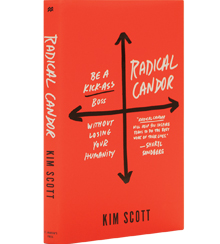
Why Managers Can’t Skimp on Radical Candor
strategy+business, April 17, 2017
by Theodore Kinni
It’s been a long time since I was a wage slave. But if today’s workplace is anything like what Kim Scott describes in Radical Candor, it must be a nightmare. People are picking their noses, stinking up the joint with body odor, and tucking their underwear into the office furniture. They call each other “dumb-a**” and cry a lot. Crying. It sounds like preschool for grownups.
Or maybe that’s just business as usual in Silicon Valley, where Scott, an entrepreneur, executive, and executive coach, spent a decade or so. She ran online sales and service at Google’s AdSense, YouTube, and DoubleClick, where she worked for her Harvard Business School classmate Sheryl Sandberg. Then, she joined Apple University, where she designed and taught a course for first-time managers. With those unimpeachable credentials in hand, Scott struck out on her own, coaching CEOs at Twitter, Dropbox, and Qualtrics. In 2016, she cofounded Candor Inc., a training firm built around the concept of radical candor, which she developed.
Radical candor stems from Scott’s conviction that interpersonal relationships are the currency of management. “They determine whether you can fulfill your three responsibilities as a manager: 1) to create a culture of guidance (praise and criticism) that will keep everyone moving in the right direction; 2) to understand what motivates each person on your team well enough to avoid burnout or boredom and keep the team cohesive; and 3) to drive results collaboratively,” she writes. “If you think that you can do these things without strong relationships, you are kidding yourself”...read the rest of the review here
Friday, April 7, 2017
Investing in America’s Data Science and Analytics Talent
Learned a lot lending an editorial hand on this joint report:

Saturday, March 25, 2017
2017 Commercial Aviation Trends

Friday, March 17, 2017
The Flare and Focus of Successful Futurists
Enjoyed editing Amy Webb's adaptation of her book, The Signals Are Talking, for MIT Sloan Management Review:
 Futurists are skilled at listening to and interpreting signals, which are harbingers of what’s to come. They look for early patterns — pre-trends, if you will — as the scattered points on the fringe converge and begin moving toward the mainstream. The fringe is that place where hackers are experimenting, academics are testing their ideas, technologists are building new prototypes, and so on. Futurists know most patterns will come to nothing, so they watch and wait and test the patterns to find those few that will evolve into genuine trends. Each trend is a looking glass into the future, a way to see over time’s horizon. This is forecasting: simultaneously recognizing patterns in the present and thinking about how those changes will impact the future so that you can be actively engaged in building what happens next — or at least be less surprised by what others develop. Forecasting is a learnable skill, and a process any organization can master.
Saturday, March 11, 2017
Regulation, Who Needs It?

Wednesday, March 8, 2017
Nir Eyal’s Required Reading
strategy+business, March 8, 2017
by Theodore Kinni
Nir Eyal teaches companies how to hook customers. When he says hook, he doesn’t mean entice or engage — he means designing products that are habit-forming.
“Habit-forming products change user behavior and create unprompted user engagement,” Eyal explains. “The aim is to influence customers to use your product on their own, again and again, without relying on overt calls to action such as ads or promotions. Once a habit is formed, the user is automatically triggered to use the product during routine events such as wanting to kill time while standing in line.”
Eyal first got interested in habit-forming products in 2008, as cofounder and CEO of AdNectar, a platform for advertisers trying to reach social gamers. In the process of launching the company, he became intrigued with the behavioral influence that gaming sites and other social media sites, such as Facebook and Twitter, exerted on users.
After AdNectar was acquired by Lockerz in 2011, Eyal took a deep dive into the nuts and bolts of habit formation. He taught at the Stanford Graduate School of Business and the Hasso Plattner Institute of Design. He invested in and consulted with companies seeking to hook customers. Eyal encapsulated his findings in the best-selling book Hooked: How to Build Habit-Forming Products (Portfolio, 2014), which details the Hook Model, a four-step cycle for creating habit-forming products.
One of Eyal’s motivations for developing the Hook Model and writing Hooked was his own frustration with the lack of information on the topic for product designers. When I asked him about the books that had influenced him, he shared the following four titles. See the titles here.
Zero-based trade for CPG leaders: Five steps for raising the impact of your trade promotions
Learned a lot lending an editorial hand here:
PwC Strategy&, March 8, 2017
by David Ganiear and Edward Landry
The next wave of profitability for consumer packaged goods (CPG) companies will come from zero-based trade (ZBT). This adaptation of zero-based budgeting goes beyond cost management of trade promotion. It helps manufacturers rethink their patterns of spending and increase the profitability of this all-important way of reaching end consumers in retail stores. Trade promotion, which directs shopper awareness at the point of sale, is a valuable strategic capability. In the annual expenses of a CPG company, it typically ranks second; only the cost of goods sold is greater.
ZBT represents a five-step process for raising the impact of that spending. The first step is to diagnose your situation and look for previously unseen opportunities for improvement. Second, develop trade promotion strategies that are aligned with your business strategy, reflecting both the financial returns you expect from your trade promotion investment and the level of freedom you have to redeploy it. Third, employ trade optimization levers — budgeting, pricing, analytic planning, and post-event analysis — to implement these new strategies. Fourth, bring your overall trade budgets in line with your new approach. Finally, give this new ZBT practice the enabling capabilities needed to sustain it over time. Together, these steps add up to a new overall trade promotion strategy that can yield millions in savings for your CPG company and give it a customer-facing competitive edge. Download the white paper here.
Thursday, March 2, 2017
RSA 2017: 5 Takeaways From the Biggest Cybersecurity Conference
Lent an editorial hand here:
WSJ.CustomStudios, March 2, 2017
by David B. Burg and Grant Waterfall, PwC
The annual RSA Conference acts like a microcosm of the global cybersecurity ecosystem: everyone’s there, and it’s as kinetic and chaotic as the industry itself. Yet the industry’s biggest cybersecurity conference also provides some valuable insights, as we recently found.
Since returning from RSA in mid February, where PwC maintained a lively presence amid the hubbub, we’ve condensed our takeaway into five key points:
Efficiency: A record 43,000 information security professionals attended this year’s RSA, roaming 550 vendor booths and choosing among more than 500 educational sessions to attend. As the cybersecurity world continues to expand and grow in importance and relevance, this event continues to grow as well — just five years ago, only 17,000 information security professionals attended RSA, according to the event managers. So for anyone who wants to find out just about anything about cybersecurity, it’s all there. Someone new to the cybersecurity and privacy industry could theoretically cram months of research and learning into just a few days in San Francisco. Read the rest here.
Wednesday, February 22, 2017
The Sisyphean Task of Activating Boards of Directors
strategy+business, Feb. 22, 2017
by Theodore Kinni
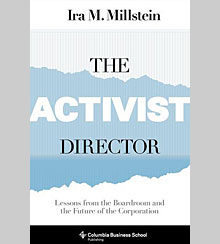 Ira M. Millstein opens his new book, The Activist Director (Columbia University Press, 2016), a mashup of memoir and handbook, as if he were standing in front of a jury. “I will build the case for adopting a board-centric approach to corporate governance by placing more activist directors in the boardroom — people who will ask the tough questions, challenge management practices, and resist those who put their own agendas ahead of those of the corporation and investors like you,” writes Millstein, the senior partner at corporate law firm Weil, Gotshal & Manges and adjunct professor at Columbia Law School. “Some will call this pie-in-the-sky idealism. I prefer to call it pragmatic optimism.”
In addition to being an optimist, 90-year-old Millstein is a patient man. He has been making this particular argument for nearly 40 years, since the late 1970s, when he began helping the Business Roundtable draft a series of reports that defined the role and responsibilities of boards. At the time, shareholder activism was starting to manifest itself in leveraged buyouts and hostile takeovers, and Millstein wanted “to ensure that boards exert some initiative to restore corporate competitiveness.”
Toward this end, Millstein didn’t simply write about boards — he advised them. And he advised them to be aggressive. Most notably, he served as external counsel to the board of General Motors for about a decade starting in 1985. During that period, GM was losing money and market share. Yet chairman and CEO Roger Smith, the “Roger” in Michael Moore’s scathing documentary Roger and Me, refused to treat the board as anything more than a rubber stamp — which was the de rigueur role of most corporate boards. Braving Smith’s legendary temper, Millstein helped GM’s board find its feet. And when Smith retired, he advised the board as it took a more active role in governance — hiring Robert Stempel as CEO and then, within two years, firing him and other members of GM’s senior management team when they did not move quickly enough to right the ship. Read the rest here.
Wednesday, February 8, 2017
Susan David’s Required Reading
strategy+business, Feb. 8, 2017
by Theodore Kinni
Tuesday, February 7, 2017
Exaggerated Truth-Telling Is Commonplace, But Not Admirable
LinkedIn Pulse, Feb. 7, 2017
by Theodore Kinni
In 1919, as the White and Red armies fought a brutal, seesaw war for control of Russia, British War Secretary Winston Churchill prodded his government to commit troops to the fight. The Bolsheviks, he declared, were “swarms of typhus bearing vermin.” They “hop and caper like ferocious baboons amid the ruins of their cities and the corpses of their victims.” Churchill’s rhetoric was so inflammatory that, after he addressed the House of Commons on the topic, Tory Party leader A.J. Balfour felt compelled to comment. With quintessential British coolness, the former Prime Minister told the future Prime Minister, “I admire the exaggerated way you tell the truth.”
Unfortunately, exaggerated truth-telling is as commonplace in business as in politics. Walter Isaacson cites Steve Job’s “reality-distortion field” repeatedly in his go-to biography of the Apple’s mercurial chief. “[Jobs] would assert something—be it a fact about world history or a recounting of who suggested an idea at a meeting—without considering the truth,” writes Isaacson. He would conjure up an impossible production date, for instance, and demand it be met. Surprisingly, as Isaacson recounts, it often was.
Elon Musk seems to have picked up Job’s penchant for exaggerated truth-telling. Musk says that Tesla’s factory in Fremont, CA will produce as many as 500,000 vehicles in 2018—an “extraordinary leap in production” from less than 84,000 in 2016, according to Jeff Rothfeder’s insightful analysis in The New Yorker. Can Musk’s employees and suppliers deliver on his promise or is this exaggerated truth-telling? Well, as The Wall Street Journal calculates it, Tesla has missed Musk’s projections more than 20 times in the past five years. Read the rest here.
Tuesday, January 31, 2017
2017 Chemicals Trends
By Vijay Sarathy, Marcus Morawietz, Jayant Gotpagar, and Jeremy Bebiak

The structural headwinds in the chemicals industry are blowing like a gale out of the global economy. In a funk since peaking in 2007, global economies have been unable to reach the 35-year GDP growth average of 3.5 percent in six of the past eight years. And the two years of “high” growth were more of a bounce back from the sharp downturn of 2009 than precursors of a sustained turnaround.
Within this problematic macroeconomic environment, made worse for many multinationals by the strong dollar, demand for chemicals has fallen. Overall industry sales growth increased an anemic 2.1 percent in 2016 as the sector faced declining industrial production and broad inventory rightsizing by many of its customers. Chemicals companies that sell petroleum-based products often fell short of these industry averages because lower oil prices led to sharp top-line declines, sometimes in the range of 30 to 40 percent. Only naphtha-based producers benefited from oil price weakness, because it translated into materials cost reductions of about 60 percent for some companies, which greatly improved profit margins. Read the rest here.
Monday, January 30, 2017
Private-sector participation in the GCC: Building foundations for success
Learned a lot lending an editorial hand here:
PwC Strategy&, Jan. 30, 2017
The governments of the Gulf Cooperation Council (GCC) states have decided to change their economic development model. The state-led approach which relied upon natural resources successfully raised incomes from developing to developed country levels in a little over a generation. However, that model is no longer appropriate as it is undermined by oil dependence, a lack of workforce diversity and skills, a growing need for public services, and insufficient innovation.
One effective response is private-sector participation (PSP). GCC states are already using PSP, but have wielded it tactically and ad hoc. As a result, they have not tapped its full potential. Instead, a comprehensive strategic program of public–private partnerships (PPPs) and privatization initiatives that covers all major sectors of the economy is needed to define a country’s PSP plan. If GCC states can successfully develop, launch, and execute such a PSP program, they can transform their economies. The GCC states could avoid US$164 billion in capital expenditures by 2021 and generate $114 billion in revenues from sales of utility and airport assets alone, and up to $287 billion from sales of shares in publicly listed companies.
Furthermore, GCC states could narrow the innovation gap with other countries, enhance the delivery of and access to government services, and improve their infrastructure. To capture these benefits, GCC governments will need a rigorous and comprehensive approach to PSP and a clearly articulated, long-term implementation plan that encompasses all economic sectors. Such an approach rests on three foundational elements: A governing policy for PSP that is either a standalone policy or part of a broader national policy; a legal framework that encompasses the new laws or modifications to existing laws necessary to facilitate PSP activities; and an institutional setup that clearly defines and allocates authority over PSP to existing government entities or establishes new entities to govern it. Download the white paper here.
Wednesday, January 25, 2017
Peter Diamandis’s Excellent Adventure
strategy+business, January 25, 2017
by Theodore Kinni
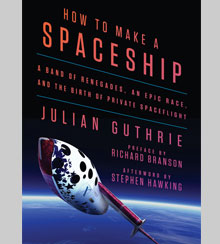 Stephen Hawking believes we humans won’t survive another thousand years unless we colonize space. And if we do colonize space, people will probably erect statues of Peter Diamandis in town squares across the universe. At least that’s the impression that ex–San Francisco Chronicle reporter Julian Guthrie gives in How to Make a Spaceship (Penguin, 2016).
In Spaceship, Guthrie tells the story of the Ansari XPrize and of SpaceShipOne — the privately developed, piloted craft that, in 2004, won the US$10 million competition by flying into space and back twice within two weeks. Although it was an inspirational feat, the book is a bit of a mixed bag. It’s a terrific yarn, to be sure. But it’s also an overly detailed biography of Diamandis that verges on hagiography and a missed opportunity to explore how new industries emerge from the intersection of government and the private sector.
Diamandis was 8 years old when Neil Armstrong stepped onto the moon in 1969. Like millions of American kids of similar age, he dreamed of becoming an astronaut. Unlike almost all those other kids, he never outgrew the dream — even as he attended Harvard Medical School, where he graduated only after promising the school’s dean never to actually practice medicine.
Instead, Diamandis became a serial entrepreneur in the space business. Among the numerous ventures he cofounded and led from the late 1980s to the 2000s were International Microspace, which provided low-cost satellite launch services; Zero Gravity, which offered well-to-do thrill-seekers parabolic “weightlessness” flights in a Boeing jet; and BlastOff, which aimed to fly a mission to the moon. The business results of his ventures were mixed at best: Zero Gravity is the only one of these three still operating independently. But in zooming from one business to another, Diamandis got the idea to jumpstart a private-sector space race with a prize — a competition modeled on the $25,000 Orteig Prize that prompted Charles Lindbergh’s solo flight across the Atlantic in 1927. Read the rest here.


