Tuesday, December 13, 2022

Employee resource groups are more than “food, fun, and flags”

strategy+business, December 13, 2022

by Theodore Kinni



Photograph by MoMo Productions


In 1964, in the aftermath of race riots in Rochester, New York, Joseph Wilson, the CEO who transformed the Haloid Photographic Company into Xerox, invited Black employees to come together to address and remedy racial discrimination within the company. This group evolved into the National Black Employees Caucus, the first employee resource group (ERG). A half-century later, ERGs are a ubiquitous feature of the corporate landscape.

“ERGs have formed within the workplace to support and represent people with identities and demographics related to gender, race, sexual orientation, ability/disability, caregiver roles, military status, religious affiliation, generation, geographic area, job function, and more,” writes diversity, equity, and inclusion consultant and coach Farzana Nayani in The Power of Employee Resource Groups. In this handbook, Nayani offers practical advice to leaders of companies and ERGs who want to ensure that the time and resources they invest in their own groups are well spent.

“There is much debate as to whether affinity groups and ERGs are simply there to celebrate ‘food, fun, and flags,’” writes Nayani. But that’s a reductionist view, she says, one that ignores a host of potential benefits ERGs can provide to employees, companies, and communities. Nayani ticks them off: support, opportunities, and a voice for marginalized employees; enhanced leadership development and innovation pipelines; better employee engagement; increased reputational capital for the company; and more inclusive and socially responsible corporate behaviors that can deliver dividends to the communities in which businesses operate.

The key to achieving these benefits, says Nayani, is forging an explicit connection between a company’s ERGs and its organizational goals in five areas: workforce, workplace, marketplace, community, and suppliers. “Each of these five pillars is an area of focus where employee resource groups can offer contributions and also receive the benefits of efforts focused on the key themes,” she adds. Read the rest here.


Thursday, December 8, 2022

It’s Time to Take Another Look at Blockchain

MIT Sloan Management Review, December 8, 2022

Ravi Sarathy, interviewed by Theodore Kinni


It wasn’t long after the developers of bitcoin first used a distributed ledger to record transactions in 2008 that the blockchain revolution was announced with all the fanfare that usually accompanies promising new technologies. Then, as often happens with emerging technologies, blockchain’s promise collided with developmental realities.

Now, a decade and a half down the road, that early promise is becoming manifest. In his new book, Enterprise Strategy for Blockchain: Lessons in Disruption From Fintech, Supply Chains, and Consumer Industries, Ravi Sarathy, professor of strategy and international business at the D’Amore-McKim School of Business at Northeastern University, argues that distributed ledger technology has matured to the point of enabling a host of applications that could disrupt industries as diverse as manufacturing, medicine, and media.

Sarathy spoke with Ted Kinni, senior contributing editor of MIT Sloan Management Review, about the state of blockchain, the applications that are most relevant now for large companies, and how their leaders can harness the technology before established and new competitors use it against them.


MIT Sloan Management Review: Blockchain has been slow to gain traction in many large companies. What’s holding it back?

Sarathy: Blockchain is a complex technology. It is often secured by an elaborate mathematical puzzle that is energy intensive and requires large investments in high-powered computing. This also limits the volume of transactions that can be processed easily, making it hard to use blockchain in a setting like credit card processing, which involves thousands of transactions a second. Interoperability is another technological challenge. You’ve got a lot of different protocols for running blockchains, so if you need to communicate with other blockchains, it creates points of weakness that can be hacked or otherwise fail.

Aside from the technological challenges, there is the issue of cost and benefit. Blockchain is not free, and it’s not an easy sell. It requires significant financial and human resources, and that’s a problem because it’s hard to convince CFOs and other top managers to give you a few million dollars and a few years to develop a blockchain application when they do not have clear estimates of expected returns or benefits.

Lastly, there are organizational challenges. A blockchain is intended to be a transparent, decentralized network in which everyone talks to each other without any intermediaries organized in a world of hierarchies. Making that transition can require a long philosophical and cultural leap for traditional companies used to a chain of command. Trust, too, becomes a huge issue, particularly when you start adding independent firms to a blockchain. Read the rest here.

Tuesday, December 6, 2022

Preparing Your Company for the Next Recession

Learned a lot lending an editorial hand here:

MIT Sloan Management Review, December 6, 2022

by Donald Sull and Charles Sull


Winter is coming: Inverted yield curves, rising interest rates, and a rash of layoff announcements have convinced many economists that the global economy is headed for a downturn. Recessions are bad for business, but downturns are not destiny.

The worst of times for the economy as a whole can be the best of times for individual companies to improve their fortunes. One study found that lagging companies are twice as likely to overtake industry leaders during a recession, relative to nonrecessionary periods. Another study, of nearly 4,000 global companies before, during, and after the Great Recession, found that the top decile of companies grew earnings by 17% per year during the downturn, while the laggards saw profits stagnate or decline. The difference between the companies in the two groups translated into $6 billion in enterprise value on average.

How can the same recession cause some corporate empires to rise and others to fall? The short answer is that uncertainty surges dramatically during recessions — increasing roughly threefold at the company level compared with the relative calm before or after a downturn.

“Chaos isn’t a pit,” explains Petyr “Littlefinger” Baelish in Game of Thrones. “Chaos is a ladder.” The chaos of a recession, however, is both a pit and a ladder. In the face of uncertainty, some companies retrench. They abandon attractive customers and promising markets, offload valuable assets at fire sales, cut prices, and seek new partners to bolster cash flow. Others start climbing. They seize opportunities and improve their fortunes.

Our research has identified three fundamental ways to manage uncertainty: resilience, local agility, and portfolio agility. Leaders can take a series of steps, such as building a strong balance sheet or diversifying cash flows, to boost an organization’s resilience and ability to withstand environmental shocks. Local agility is the ability of individual business units, functions, product teams, and geographies to respond quickly and effectively to changes in their specific circumstances.

Portfolio agility is an organization’s capability to quickly and effectively shift resources across different parts of the business. While local agility enables individual teams to spot and seize opportunities, portfolio agility enables the company as a whole to double down on its most promising investments. Portfolio agility is, by some estimates, the largest single driver of revenue growth and total shareholder returns for large companies. Quickly and effectively reallocating resources is valuable at any point in the business cycle, but it’s decisive during downturns, when internal cash flows dwindle and access to external funding dries up.

Resilience and agility are effective in isolation, but in combination, their impact is turbocharged. In the midst of a downturn, resilient companies can weather the storm to wait for opportunities to arise. Having a high level of resilience — by building a war chest of cash or obtaining secure access to funding — provides an organization with the wherewithal to fund emerging opportunities, but only if it is agile enough to seize those opportunities. Resilience without agility may ensure survival but will not position a company for future growth. Agile companies without resilience, in contrast, often lack the resources to exploit the opportunities they spot. Read the rest here.

Tuesday, November 29, 2022

Three Ways Companies Are Getting Ethics Wrong

Learned a lot lending an editorial hand here:

MIT Sloan Management Review, November 29, 2022

by David Weitzner


Making business decisions that are both ethically and strategically sound has always been incredibly tricky. Leaders are called upon to act in a manner that is consistent with their personal values, builds solidarity and trust among diverse stakeholders, enhances their company’s reputation, and prevents scandals, while also being mindful of the bottom line.

This leadership challenge is getting ever more complex. Investors are measuring companies against environmental, social, and corporate governance (ESG) indexes. Employees are demanding extensive diversity, equity, and inclusion (DEI) commitments. And customers want to buy brands that are tied to strong corporate social performance (CSP).

As counterintuitive as it might seem in the burgeoning ethical complexity of ESG, DEI, and CSP, a few companies have found that when it comes to ethics, simpler is better. They meet the demands listed above by rejecting the notion that ethics are necessarily complex. They refuse to abdicate their ethical responsibilities; they craft value propositions that do not lean on social value initiatives to obscure or distract from how the company creates financial value; and they are transparent about how they do business with all stakeholders. Read the rest here.

Tuesday, November 15, 2022

In search of clarity

strategy+business, November 15, 2022

by Theodore Kinni


Photograph by Klaus Vedfelt

I’ve never envied CEOs for the hard decisions they must make. There are the career choices that threaten their work­–life balance and families, and the strategic decisions that put companies and employees at risk. And increasingly, there are a broad range of ethical conundrums related to social justice and equity, political ideology and conflict, and environmental sustainability. 

For lucky leaders, these decisions arise infrequently. But when they do, they often require introspection as much as—or more than—algorithmic analysis. After all, how much can AI-powered analytics tell a leader about how to frame a personal and organizational response to the war in Ukraine, Florida’s Parental Rights in Education Act, or the Black Lives Matter movement?

The inherent difficulty of crafting responses to such events is compounded by a couple of conditions. There’s the mantle of power and authority that can make some top leaders reluctant to reach out for help for fear of revealing their vulnerability or appearing indecisive or uninformed. There is the issue of trust, too: even in the most collaborative corporate cultures, senior management team members and other executives have their own agendas and ambitions that can skew their advice to the CEO.

Clearness committees offer leaders a way around these obstacles and through their most difficult decisions. The concept is rooted in the values of the Quakers, the Protestant sect that emerged in England in the 17th century. It has been adapted for a more secular context in the past half-century or so, a process in which Parker J. Palmer, cofounder and senior partner emeritus of the South Carolina–based Center for Courage & Renewal, was instrumental. Read the rest here.

Wednesday, November 9, 2022

Environmental Risks Go Far Beyond Climate Change

Learned a lot lending an editorial hand here:

Boston Consulting Group, November 9, 2022

by James Tilbury, Adrien Portafaix, Rebecca Russell, and Fabien Hassan


Just as investors and other stakeholders now expect companies to reduce greenhouse gas emissions, soon companies will be expected to report and act on a much broader range of nature-related risks. These risks encompass a host of environmental and ecological impacts connected to $44 trillion in economic value generation, or nearly half of the total global GDP, according to the World Economic Forum. Nature-related emergencies—from natural disasters to the extinction of a growing number of plant and animal species—will be business emergencies, too. That is why companies must plan for the coming nature transition now.

What Are Nature-Related Risks?

Managing and mitigating nature-related risks will require a much wider lens than most companies have adopted to date. There are nine planetary boundaries that span our world—the land, sea, and atmosphere—and the life that it supports. Planetary boundaries are the boundaries that humans must stay within to maintain a stable environment and decrease the risk of irreversible environmental change.

The planetary boundary that many are familiar with is climate change, but it is important to note that climate change is one of nine, with the others being biosphere integrity, land-system change, novel entities (such as toxic substances), freshwater change, stratospheric ozone depletion, atmospheric aerosol loading, ocean acidification, and biochemical flows. 

It is only when all nine planet boundaries are taken together, that companies can begin to evaluate their exposure to nature-related risks. To do that effectively, business leaders will need to adopt a mindset of “double materiality”—that is, they will need to think through how business activities may impact each of the boundaries and, as crucially, how each of the boundaries may impact business performance.

Although some companies have greater exposure to environmental and ecological degradation and collapse than others, the leaders of all companies need to adopt a more comprehensive approach to nature-related risks. As with climate change, customers, employees, and governments will demand it. In addition, investors will require it, especially large investors with diverse portfolios that are particularly vulnerable to the systemic threats arising from natural disasters and ecosystem collapse. Read the rest here.

Monday, November 7, 2022

Get Ready for the Next Supply Disruption

Learned a lot lending an editorial hand here:

MIT Sloan Management Review, November 7, 2022

by M. Johnny Rungtusanatham and David A. Johnston


Michael Austin/theispot.com

The COVID-19 pandemic has ushered in an era of supply chain disruption and unpredictability that has severely challenged many companies’ planning and processes, and revealed how far prevailing practices are from the ideal. An MIT Center for Transportation and Logistics poll conducted online at the onset of the pandemic revealed that only 16% of organizations had an emergency response center — an established best practice for mitigating and recovering from unplanned interruptions in the physical flow of goods.

Unsurprisingly, given the pandemic’s disruptive effects, the same poll found that the highest ambition of supply chain managers was to bolster their risk management protocols and tools. The problem with crisis-driven supply chain initiatives that are focused on protocols and tools is that they are only as effective as the ability of the organization to use them. Having that ability requires the systematic development of capabilities to manage for supply disruptions. These capabilities are combinations of people, policies, processes, and technologies that ensure companies can not only plan for and respond to known business and operating risks but also — and more importantly — manage unknown-but-knowable threats and their associated consequences.

We’ve identified six capabilities that fill this bill: anticipate, diagnose, detect, activate resources for, protect against, and track threats. Together, they constitute the ADDAPT framework, which is based on our research into how public agencies and private enterprises experience and respond to supply disruptions like the COVID-19 pandemic. In medicine, pathology is aimed at understanding the causes and effects of a disease to guide treatment. Similarly, the ADDAPT capabilities help companies understand the causes of supply disruptions and their immediate and long-term effects, in order to both respond to unfolding supply disruptions and prevent their recurrence. Read the rest here.

Tuesday, October 18, 2022

Did Jack Welch Blow Up the Business World?

MIT Sloan Management Review, October 18, 2022

by Theodore Kinni


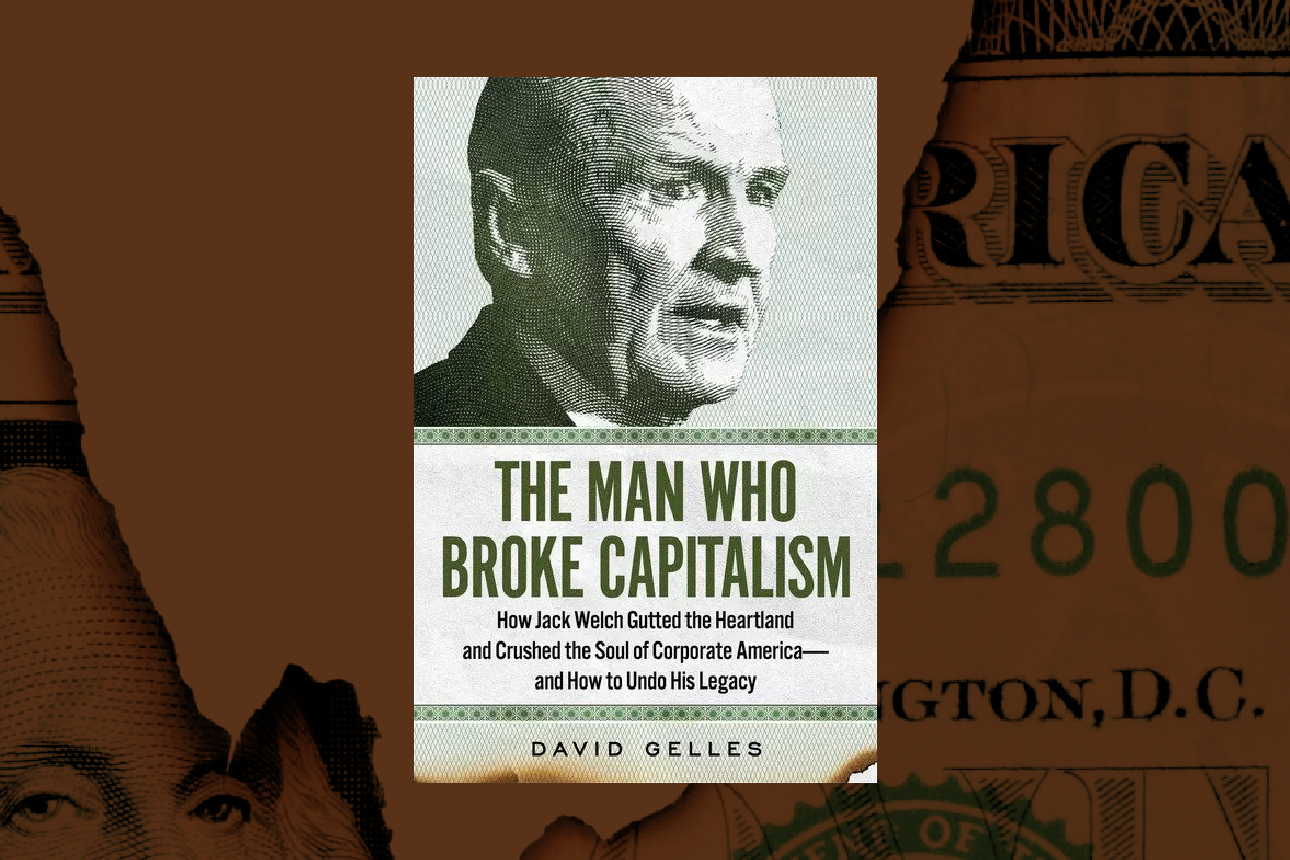
“The history of the world is but the biography of great men,” wrote 19th-century Scottish historian Thomas Carlyle. With The Man Who Broke Capitalism, New York Times business reporter David Gelles attempts to resuscitate the hoary “great man” theory of leadership in a backhanded sort of way. He calls out the late Jack Welch, the General Electric CEO whom Fortune magazine anointed “manager of the century” in 1999, as the evil mastermind behind the litany of economic woes rooted in shareholder capitalism gone wild, but he pays scant attention to their root causes.

When Welch took up the reins at GE in 1981, it was not a prosperous time in America’s economic history. The post-World War II boom was on its last legs: America’s industrial giants were sinking under their own weight, and foreign companies, especially those from Japan and Germany, were making inroads the size of superhighways into the U.S. consumer market. GE, then one of the nation’s leading companies, was languishing in the slow growth environment too.

If you were in business in the 1980s and ’90s, Gelles’s recounting of Welch’s tenure at GE will be a familiar story. “Neutron Jack” cut head count and instituted an annual employee ranking scheme that required that employees in the lowest decile be fired. The company’s business units had to be No. 1 or 2 in their market or they were jettisoned. Meanwhile, Welch chased new growth opportunities in financial services and media — soon, GE Capital alone accounted for more than half of the company’s profits.

The results? “During [Welch’s] tenure, GE posted annualized share price growth of about 21% a year, far outpacing the S&P 500 even during a historic bull market,” writes Gelles. “When Welch took over, GE was worth $14 billion. Two decades later, the company was worth $600 billion — the most valuable company in the world.” Read the rest here.

Tuesday, September 13, 2022

Manage Your Customer Portfolio for Maximum Lifetime Value

Learned a lot lending an editorial hand here:

MIT Sloan Management Review, September 13, 2022

by Fred Selnes and Michael D. Johnson


Traci Daberko/theispot.com

Many companies have embraced the importance of creating closer, more valuable relationships with customers. But most do little to actively manage their portfolios of weaker and stronger relationships, other than keeping them diversified. They’re missing significant opportunities.

When we wrote about customer portfolio management (CPM) and our research into customer portfolio lifetime value (CPLV) for this publication in 2005, we emphasized the need to balance a “large, leaky bucket” of weaker customer relationships alongside closer and higher-value customer relationships. But according to our latest research, there is much more that businesses can and should be doing to drive future revenue. These actions depend on both market conditions and a company’s resources.

Growing a company’s customer portfolio requires continual investments across a range of weaker to stronger relationships. Our updated CPLV model shows that a clear understanding of when and how much to invest in, leverage, and defend different customer relationships is an essential determinant of both current and future revenues and costs.

Most companies lack a basis for developing this understanding. Business leaders seeking to optimally manage the ecosystem of customer relationships face a complex problem — and for most, de facto CPM practices are more likely to focus myopically on either current sales or their most valuable customers. However, our model shows that what’s really required is to integrate multiple dimensions (not just scale, but also variances in customers’ needs and wants) and tactics (relationship conversion, leverage, and defense) across the whole customer portfolio.

Our CPM framework and CPLV model enable executives to answer the following key questions as they seek to grow and optimize their company’s customer portfolio:
  • How central is developing customer relationship strength to our strategy and competitive advantage? More specifically, when and how much should we invest in converting weaker relationships to stronger relationships?
  • How do we leverage these investments once relationships are created?
  • How do we protect the relationships we have created to minimize customer churn?
The CPM framework we’ve constructed and applied over the past two decades rests on a fundamental principle: It’s in a company’s best interest to view its market strategy as a long-term investment in the strength of relationships over an entire portfolio of current and future customers. Its core element is the segmentation of customers by their relationship with a brand — progressing from strangers to acquaintances to friends and, finally, to partners.

Our CPLV model illuminates how these relationships relate to the value proposition of a company by predicting a seller’s future revenues from and costs associated with the different relationship segments. These predictions are based on a set of parameters that includes market growth over the course of a product life cycle, unit cost over time, the cost and probability of deepening relationships, relationship premiums, and switching costs and probabilities. By running extensive simulations within the model, we have identified three explicit goals for an effective CPM growth strategy: relationship conversion, relationship leverage, and relationship defense. Read the rest here

Thursday, September 8, 2022

How Smart Products Create Connected Customers

Learned a lot lending an editorial hand here:

MIT Sloan Management Review, September 8, 2022


Jon Krause/theispot.com

As leaders of legacy product and service companies anchored in traditional value chains seek ways to prosper in the digital economy, one of the most important questions they can ask is, “How can we turn our existing customers into digital customers?” Digital customers don’t simply buy products and services: Their interactions with those products and services generate data that companies leverage to provide them with greater value over time. Those data insights also help companies attract new customers, create fresh revenue streams, and expand the scope of their businesses. This customer-generated data, which is often combined with other data streams, has fueled the growth engines of companies built on digital platforms, like Amazon and Google.

Legacy companies typically collect episodic data from discrete events — the sale of a product or the shipment of a component, for instance. Amazon and Google capture a continuous stream of data at every customer touch point on their platforms that is used to generate a new class of insights that play a more expansive role in their businesses. All of their customers are digital customers. Now, thanks to technologies such as sensors, the internet of things (IoT), and artificial intelligence, legacy firms, too, can transform their customers into digital customers who generate streams of data via their interactions with connected products.

Sleep Number uses sensors in its mattresses to track its customers’ sleeping heart rates and breathing patterns. This data enables the company to identify chronic sleep issues, such as sleep apnea and restless legs syndrome, and expand its business scope beyond mattresses to wellness provision. Sensors on Caterpillar heavy machinery produce data that enables the company to track wear and tear, predict component failures, and create new revenue streams from maintenance services. Chubb is installing sensors in the buildings it insures to detect water leaks before they become claims. In this way, the company is expanding beyond damage compensation to damage prevention.

For all its promise, harnessing value from digital customers also brings new challenges for legacy companies. They must develop new value propositions, build out their data infrastructures and strategies, staff for new digital and product design capabilities and competencies, and rework innovation processes to create a feedback loop using valuable customer interaction data. And they must learn to market and sell their new value proposition to create a new digital customer base — and reap the benefits of their digital transformation. Read the rest here.

Thursday, August 25, 2022

How “Corporate Explorers” Are Disrupting Big Companies From the Inside

Insights by Stanford Business, August 24, 2022

by Theodore Kinni


|iStock/Alexey Yaremenko

The conventional wisdom holds that disruptive innovation is beyond the ken of large, incumbent companies. But then there are companies like Microsoft, which transformed its ubiquitous Office software suite into the Office 365 subscription service. “If Microsoft had done that as a startup, it would be a multi-unicorn,” says Andrew Binns, a founder and director of the strategic innovation consultancy Change Logic. “Office 365 is a whole new business model, but nobody talks about it as disruptive innovation.”

Binns, along with Charles O’Reilly, a professor of organizational behavior at Stanford Graduate School of Business, and Michael Tushman of Harvard Business School, finds that more and more established companies are overcoming the obstacles to innovation with the help of what they call corporate explorers. Corporate explorers are managers who build new and disruptive businesses inside their companies. Sometimes with a formal mandate, sometimes not, they use corporate assets to support and accelerate the development of these new ventures.

Binns, O’Reilly, and Tushman studied a number of these entrepreneurial insiders and report their findings in The Corporate Explorer: How Corporations Beat Startups at the Innovation Game. The book builds on the trio’s continuing research into ambidextrous organizations — companies that succeed over the long haul by simultaneously exploiting their existing businesses and building new ones that drive future growth.

In a recent interview, O’Reilly and Binns described the traits of corporate explorers and the conditions they need to thrive. Read the rest here.

Thursday, August 11, 2022

When it comes to changing culture, think small

strategy+business, August 11, 2022

by Theodore Kinni


Illustration by PM Images

Effective leaders know that long-term corporate success requires a strong organizational culture that is well aligned with a company’s purpose and strategy. As Lou Gerstner wrote, describing the turnaround he orchestrated at IBM in the 1990s, “I came to see, in my time at IBM, that culture isn’t just one aspect of the game—it is the game.” Nevertheless, it remains commonplace for corporate transformations, mergers and acquisitions, and other large-scale initiatives to lose momentum after running headlong into cultural barriers. What gives?

This is a question that Roger Martin, a CEO advisor and the professor emeritus of strategic management at the University of Toronto’s Rotman School, has been mulling for 30 years. In his latest book, A New Way to Think: Your Guide to Superior Management Effectiveness, a compendium of his writings for the Harvard Business Review, he observes that leaders typically approach culture change in one of two indirect ways.

Most often, Martin told me in an interview, they attempt to change the culture by edict. “They say something like, ‘I’m CEO, and this is a very bureaucratic organization. Everything takes too long. This will be a nonbureaucratic company because I say so.’”

The other commonly used approach relies on structural changes, Martin explains. “The CEO says, ‘This place is bureaucratic because the finance department is overbearing. So, the CFO will now report to the COO, and the COO has a mandate to keep finance from getting involved in things in which it shouldn’t get involved.’”

Unfortunately, neither approach is powerful enough to successfully change an organizational culture on its own. “They don’t work, because they don’t change the shared interpretations and norms within an organization,” says Martin. “The truth about culture is that the only way you can change it is by changing the way individuals work with one another. If you can change that, then you will find the culture has changed.” Read the rest here.

Wednesday, July 20, 2022

Saudi Arabia’s dynamic television and video market

Learned a lot lending an editorial hand here:

PwC Strategy&/MBC Media Solutions, July 2022


by Karim Sarkis, Karim Daoud, Carla Khoury, Nadim Samara, and Jamil Kabbara


Saudi Arabia’s vibrant and rapidly growing entertainment and media (E&M) industry is making an important contribution to the country’s culture and its economic diversification. In particular, the TV market is undergoing transformation and the over-the-top (OTT) video market is dynamic and developing as new technologies emerge. Globally, audiovisual content has become a respected cultural artefact and is experiencing record levels of demand—in which Saudi Arabia can now participate.

The Saudi market’s E&M growth potential stems from its distinct features—high rates of content consumption, including TV, streaming, video sharing, and gaming; impressive adoption of smartphones; robust social media; fast connectivity; and advertising growth opportunities. Indeed, while streaming and mobile penetration are changing how video is consumed, TV retains a majority share of viewership. Digital technology allows viewers to blend linear and streaming, curating their own content.

To grab more of this market, TV and video players should know their viewers intimately so that content producers can predict programming needs, grow viewer numbers, and create content to gain audience share domestically, regionally, and internationally. Media companies should continue with extending their offerings to on-demand streaming, digital transformation, innovation, data analytics, social media engagement, and digitally enabled advertising. To support such customer-centric change, media players should deepen partnerships with telecom operators, technology companies, and content creators, while building their internal capabilities to become more innovative. Read and download report here.

Thursday, June 30, 2022

Accelerating digital: A win-win-win for customer experience, the environment and business growth

Learned a lot lending an editorial hand on this report:

Economist Impact, June 2022


Digitally advanced firms are accelerating ahead of the competition. They are able to use real-time data insights to transform customer experiences and to improve their sustainability footprint. Discover how businesses can overcome data access and activation challenges to drive profitable growth.

The business landscape is constantly evolving and, with it, digital transformation. Businesses are under pressure to adapt to new competitors, increasingly from non-traditional markets, and to navigate ongoing geopolitical and economic uncertainty. At the same time, they need to become more sustainable and socially responsible, driven by government mandates and customer demands. Our new study shows that digitally driven businesses are able to embrace these rapid changes in their markets and deliver better customer experiences to drive profitable growth.

Indeed, the vast majority of firms we surveyed (99%) are leveraging new digital business models to tackle these challenges and drive greater agility, a trend that has been accelerated by covid-19. Over half (55%) of businesses expect a long-term increase in their use of digital technologies as a result of the pandemic, according to research by the European Investment Bank.

Firms that are able to capture and derive value from new streams of data, and offer new products and services rooted in digital capabilities, can improve their operational efficiency, reduce their carbon footprint and boost customer satisfaction. This can translate into improvements in both revenues and profit margins, with 80% of our survey respondents stating that some form of digital transformation contributes over half of their profits today. Moreover, 95% expect some, most, or all of their revenue to be digitally enabled within five years.

However, there is often a wide gulf between the digital ambitions of firms and their ability to use data insights at scale, which would enable employees to make better real-time decisions and drive higher levels of innovation.

To better understand these trends, Economist Impact has undertaken an ambitious research programme. We have examined the state of digital transformation in businesses across five sectors in which digitalisation offers substantial opportunities for growth and competitive advantage: construction and infrastructure; manufacturing; transportation and logistics; energy; and healthcare and pharmaceuticals. Our global survey of 500 multinational firms identifies the ongoing barriers they face in executing their digital strategies. We offer cross-industry insights on how these barriers are being overcome based on economic analysis of firms that are successfully using digital business models to boost their customer satisfaction, sustainability metrics and revenues, and interviews with experts. Read and download the report here.

Tuesday, June 21, 2022

To improve management, build a decision factory

strategy+business, June 21, 2022

by Theodore Kinni


Illustration by Lava4images

by Don A. Moore and Max H. Bazerman, Yale University Press, 2022

“We think of organizations as decision factories,” write professors Don A. Moore and Max H. Bazerman in their new book, Decision Leadership. It’s an apt simile. Knowledge workers, whose output is typically decision-driven, now number more than 1 billion worldwide. Moreover, as the number of rote tasks that are automated increases, many more employees are being freed for higher-level work that entails decision-making.

Given this reality, it’s no surprise that boosting the decision intelligence of the workforce is moving up the leadership agenda. But Moore and Bazerman, holders of endowed chairs at the University of California, Berkeley’s Haas School of Business and Harvard Business School, respectively, take an even more expansive position on decision leadership—a stance that sets up a formidable ambition for this relatively short book.

“We aim to define leadership in a new way, one grounded in the belief that leaders’ success depends not only on their ability to make good decisions but also on their ability to help others make wise decisions,” they write. “In our view, great leaders create the norms, structures, incentives, and systems that allow their direct reports, the broader organization, consumers, investors, and other stakeholders to make decisions that maximize collective benefit through value creation.” To support their new definition of leadership, Moore and Bazerman seek to weave together the various threads of behavioral economics that pertain to decision-making and then translate them into practical advice for leaders who want to both improve the quality of their own decisions and bolster the decision prowess of their companies. Read the rest here.

Friday, June 3, 2022

Mastering Innovation’s Toughest Trade-Offs

Learned a lot lending an editorial hand here:

MIT Sloan Management Review, June 2, 2022

by Christopher B. Bingham and Rory M. McDonald


Dan Page/theispot.com

Innovation is frustratingly hit-or-miss. More than 90% of high-potential ventures fail to meet projected targets, while roughly 75% of the products released each year bomb. Few established organizations remain dominant over time, as revitalization efforts fail or backfire, costing companies time and money and creating openings for competitors; even fewer generate above-average shareholder returns for more than a couple of years.

These failures are often attributed to a lack of money, talent, or luck. But we think the underlying cause is that innovation in dynamic environments — those characterized by novelty, resource constraints, and uncertainty — is rife with critical tensions. When left unaddressed or mishandled, these tensions sink teams and organizations. Until now, there has been little focus on these tensions in practice or theory, leaving leaders blind to their existence and without the rigorous approaches needed to successfully manage them.

To address this, we conducted hundreds of interviews at organizations in diverse industries on five continents and surfaced eight questions that every innovation leader must be able to answer correctly. We’ll discuss each in turn and provide practical guidance for harnessing the tension that underlies each question. Read the rest here.

Thursday, June 2, 2022

A kinder, gentler deal

strategy+business, June 2, 2022

by Theodore Kinni


Photograph by Say-Cheese

by Barry Nalebuff, Harper Business, 2022

Anyone who has been the underdog in a negotiation is going to eat up Barry Nalebuff’s new book, Split the Pie. The Milton Steinbach Professor at the Yale School of Management, who cofounded Honest Tea as a side gig, combines logic and empathy in a strategy that undercuts power-driven negotiating tactics.

The simple principle that drives Nalebuff’s approach is this: the negotiation pie—that is, the value produced by the deal, over and above the value that the parties to the deal can create on their own—should be equally spilt. It doesn’t matter who has the most power or who needs the deal the most—what matters is the value stemming from the deal and the inability of either party to achieve it without the other. In this sense, all the parties to the deal have a legitimate claim to an equal share of the negotiation pie.

Nalebuff illustrates this concept with an easily followed example: a pizzeria will give Alice and Bob a 12-slice pizza if they can agree how to split it. If they can’t, it will give them half a pie, but unequally divided: four slices to Alice and two slices to Bob. These no-deal slices comprise what Roger Fisher and William Ury called the BATNA (best alternative to a negotiated agreement) in their best-selling negotiation book, Getting to Yes.

Nalebuff’s solution is to focus on the additional slices that Alice and Bob get if they make a deal. He splits the six additional slices in half. This gives Alice a total of seven slices (her BATNA of four slices plus her half of the six slices in the negotiation pie) and Bob gets five slices (his BATNA of two slices plus his half of six slices in the negotiation pie). Voilà.

“The pie framework will change the way you approach negotiations in business and life,” writes Nalebuff, who has been teaching this approach to MBA students and executives at Yale for the past 15 years, as well as online at Coursera. “It will allow you to see the negotiation more clearly and more logically. It will lead you to an agreement where the principle applied doesn’t depend on the specifics of your situation. It will help you make arguments that persuade others by identifying inconsistencies in their approach.” Read the rest here.

Tuesday, May 24, 2022

Persuasion, Hollywood style

strategy+business, May 23, 2022

by Theodore Kinni


Photograph by Archive Holdings Inc.

I usually associate pitching with characters like the late inventor and pitchman Ron Popeil, who earned a spot in America’s cultural history—and a small fortune—hawking products such as the Chop-O-Matic, the Pocket Fisherman, spray-on hair, and the Showtime Rotisserie and BBQ oven on late night TV. (“Set it, and forget it!”) But that’s a reductionist view, at best. Pitching is a form of interactive selling that business leaders at all levels need to master.

“We define a pitch as a scheduled meeting for the specific intention of trying to promote an idea, business project, or script,” write Peter Desberg and Jeffrey Davis in their new book, Pitch Like Hollywood. As the title suggests, Desberg, a clinical psychologist and a professor emeritus at California State University, Dominguez Hills, and Davis, a screenwriter and professor at Loyola Marymount University School of Film and Television, look to the film industry for lessons in pitching. And rightly so. Movies and TV shows are typically sold on the strength of a pitch to studio executives that can take anywhere from an hour to several days, depending on the size of the project.

Though CEOs tend to be polished presenters, pitching a new strategy to the board or an acquisition offer to the founders of a promising startup is not the same thing as making a presentation. “The biggest difference is the interactivity. Pitching is not a one-way presentation—it’s not, ‘I’m gonna tell you, and you’re gonna sit and listen to me,’” Davis told me during a video interview with the two authors. “A pitch is less controlled. If your pitch is good, you’re involving the people you’re pitching. You are trying to get their opinions, to get to what’s important to them, and to get them to help you shape your pitch to really make it work.”

This interactivity gets to the root cause of many failed pitches—mishandling criticism. “If a catcher asks a pitcher a hostile question or points out a flaw, and the pitcher gets defensive or counterattacks, the conversation dies,” said Desberg.

For their pitch to avoid this fate, leaders should take a lesson from a story the authors relate about a creative director at an ad agency who pitched six potential campaigns to a tire company executive. When he’d finished, the exec looked at him and said, “I hate everything you’ve shown me.” Unflustered, the creative director asked, “Which one do you hate the least?” That question led to a conversation that ended in a successful campaign.

Like the creative director, good pitchers see criticism as a green light. “They’re thinking, ‘This person is trying to enter a creative collaboration with me. I’ve got to nurture the heck out of that,’” said Davis. “Show business, like all business, is more collaborative than ever. If you’re not a collaborator, you have no future in business.” Read the rest here

Thursday, May 12, 2022

Unleashing the power of government transformation: The Ministry of the Future


Learned a lot lending an editorial hand here:

PwC Strategy& Ideation Center, May 2022

by Fadi Adra, Yahya Anouti, Raed Kombargi, Paolo Pigorinia, and Dima Sayess


Middle East governments have ambitious plans to transform their countries in the face of economic, social, and technological challenges. This task has been made more urgent and difficult by the COVID-19 pandemic. The difficulty is that many of the ministries and agencies responsible for envisioning and guiding transformation are hampered by their own roles, operating models, capabilities, and governance structures. If these ministries and agencies are to play a leading role in national transformation, they will have to first transform themselves.
The challenges for Middle East governments are substantial. They include changes in the region’s social fabric, mounting economic competition, technological advances, rising barriers to global trade, and budgetary pressures.In this environment, there is an urgent need for purpose-driven ministries and agencies that are fully accountable for delivering high-impact services. Too often, however, government itself becomes an obstacle to the achievement of national transformation. The sheer bulk of the region’s governments, attributable mainly to public-sector employment acting as a social safety net and weak private-sector and economic integration, reduces governmental efficiency, effectiveness, and decision-making ability. The over-involvement of government in operations and service delivery prevents private-sector engagement and expansion, hinders innovation, and creates negative competition. Moreover, few governments to date have fully taken advantage of the power of technology to lower the barriers to decision making, policy formulation, and performance evaluation.

Before they can transform their countries, governments need to become fit-for-transformation in seven ways. They must become:
  • DIGITALLY POWERED: Relying on advanced and emerging technologies to enable solutions and conduct operations
  • ANTICIPATORY AND PROACTIVE: Utilizing horizon scanning, foresight, scenario analysis, and best practices to address emerging and potential challenges and opportunities
  • CUSTOMER-CENTRIC AND HOLISTIC: Adopting a customer-focused, whole-of-life approach to service delivery
  • COLLABORATIVE AND PARTICIPATORY: Taking advantage of the collective resources, capacities, and expertise of the public sector, private sector, and citizens in order to design, deliver, and assess solutions
  • AGILE AND DYNAMIC: Employing lean and flexible organizational structures staffed with fluid, crossfunctional, and accountable teams
  • INNOVATIVE AND RESILIENT: Ideating, prototyping, piloting, and delivering creative and future-proof solutions that make government resilient
  • EVIDENCE-BASED AND RESULTS-ORIENTED: Using targets and indicators to set, monitor, and evaluate clearly defined objectives, impacts, and outcomes 


Thursday, May 5, 2022

Getting and staying motivated

strategy+business, May 5, 2022

by Theodore Kinni


Photograph by ATU Images

Get It Done: Surprising Lessons from the Science of Motivation
by Ayelet Fishbach, Little, Brown Spark, 2022

In the early years of the last century, Hanoi had a rat problem. To solve it, the French colonial government placed a one-cent bounty on the rodents, which could be claimed by anyone who delivered a rat’s tail. Thousands of tails were tendered, but Hanoi’s rat population didn’t shrink. Instead, tailless rats were running through streets, and rat farms were discovered. To make money selling rats’ tails, you need lots of rats breeding more rats. The moral of the story: be careful which behaviors you reward.

Ayelet Fishbach, the Jeffrey Breakenridge Keller Professor of Behavioral Science and Marketing at the University of Chicago Booth School of Business, tells the tale of Hanoi’s rats in Get It Done. The book is a deep dive into a veritable ocean of behavioral research, including a substantial number of studies conducted by the author. This area of scholarship is so full of codicils and complications that it’s a wonder that managers can motivate themselves, let alone the people in their charge.

Consider the role that progress plays in motivation. Will you be more motivated if you focus on how far you’ve already traveled toward a goal or if you keep your attention trained on how far you have left to go? The not-so-simple answer, explains Fishbach in chapter 5, is: it depends. What’s your emotional predilection—are you a glass-half-empty or glass-half-full kind of person? Is the goal you are pursuing a conditional one with all-or-nothing benefits that are paid on completion or an accumulative one from which you derive benefits as you go? And how far along on the path are you: how close are you to reaching your goal? Your answers to those questions determine how you should use progress as a motivational force. What’s more, if you don’t ask those questions and answer them properly, the progress that you’ve made toward your goal could become a demoralizing force and an obstacle to its achievement.

Every chapter in Get It Done reiterates the multifaceted nature of self-motivation and underscores the critical nuances in the kind of advice found in sound bites on social media... read the rest here